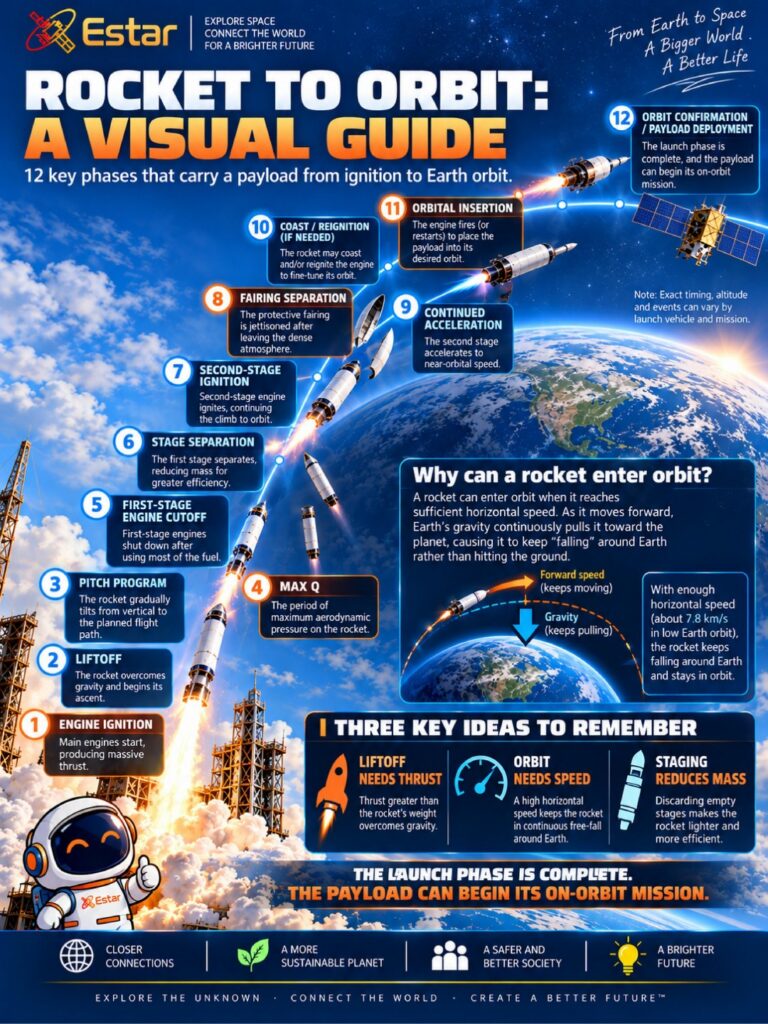

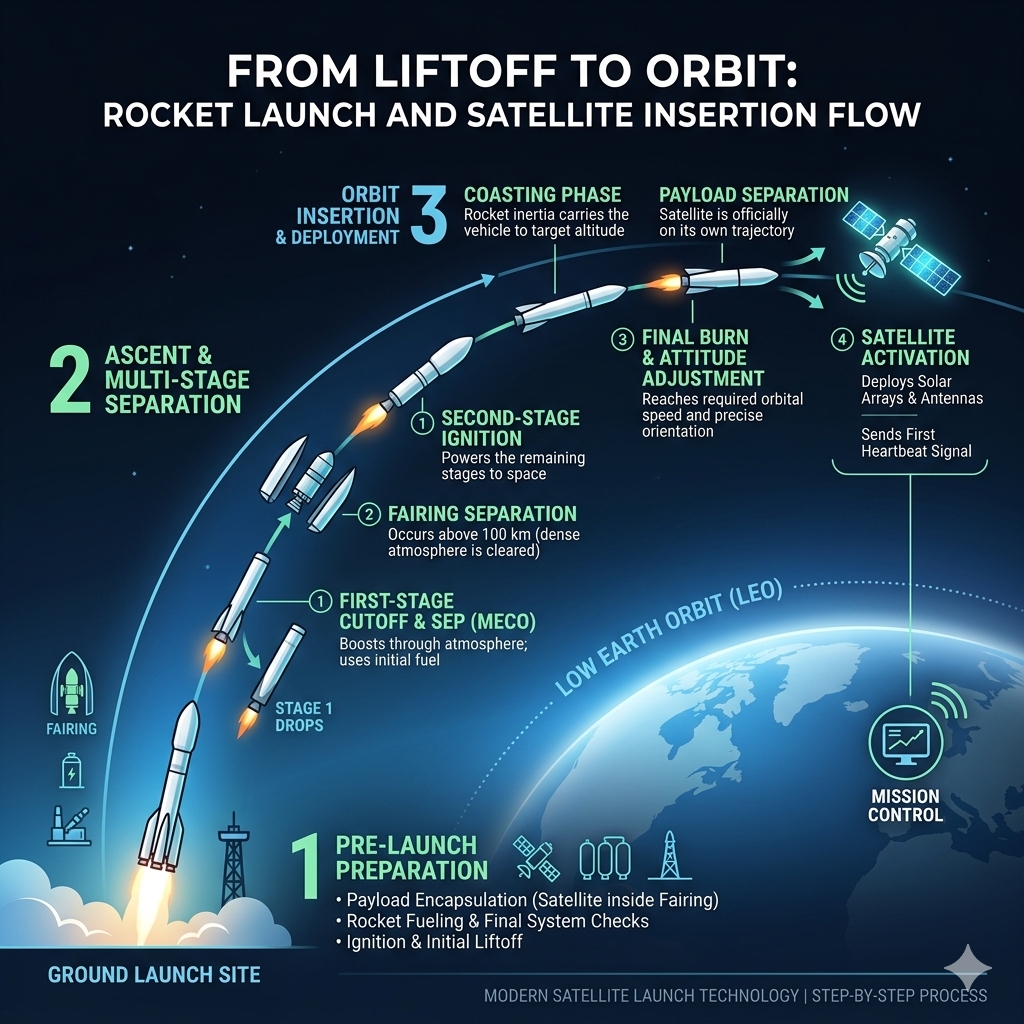

The process of a rocket launching and delivering a satellite into orbit is a highly complex and precise engineering feat. It can be broadly broken down into three main phases: Pre-launch Preparation, Ascent & Multi-stage Separation, and Orbit Insertion & Satellite Deployment.
Here is the step-by-step breakdown of how a rocket delivers a satellite into space:
1. Pre-launch Preparation
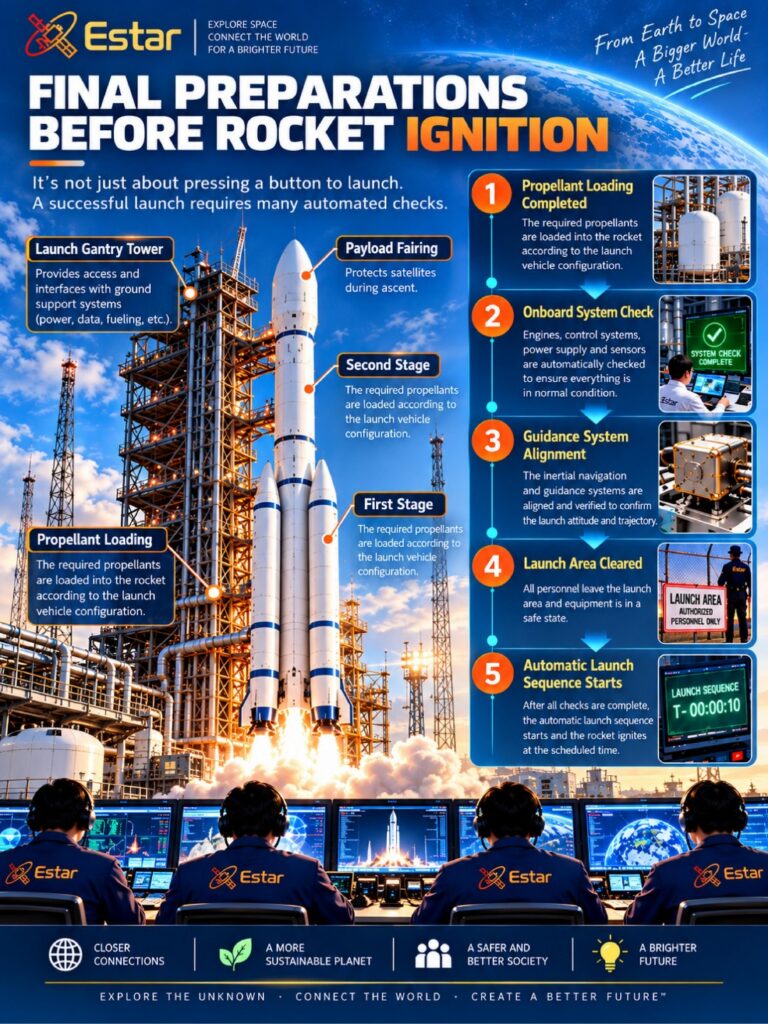
Before leaving the ground, the rocket and its cargo undergo rigorous integration and testing at the launch site.
- Payload Encapsulation: The satellite (the “passenger”) is safely sealed inside the payload fairing (the protective nose cone) at the very top of the rocket.
- Fueling: For liquid-propellant rockets, ultra-cold cryogenic fuels (such as liquid hydrogen, liquid oxygen, or kerosene) are pumped into the rocket tanks just hours before launch.
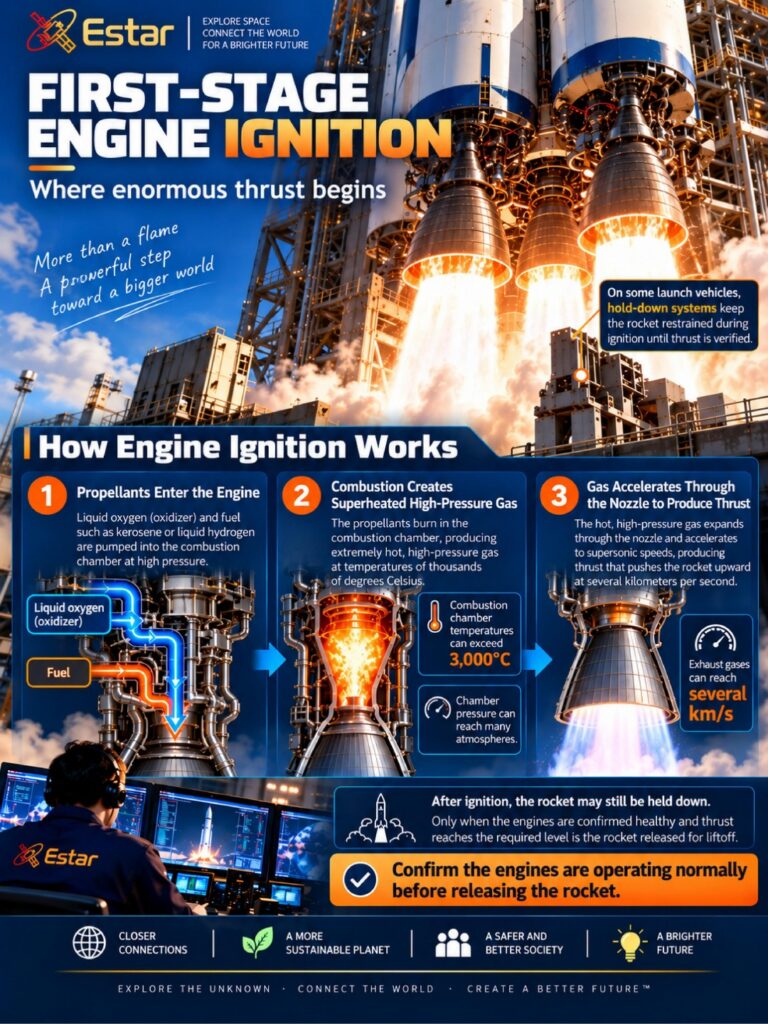
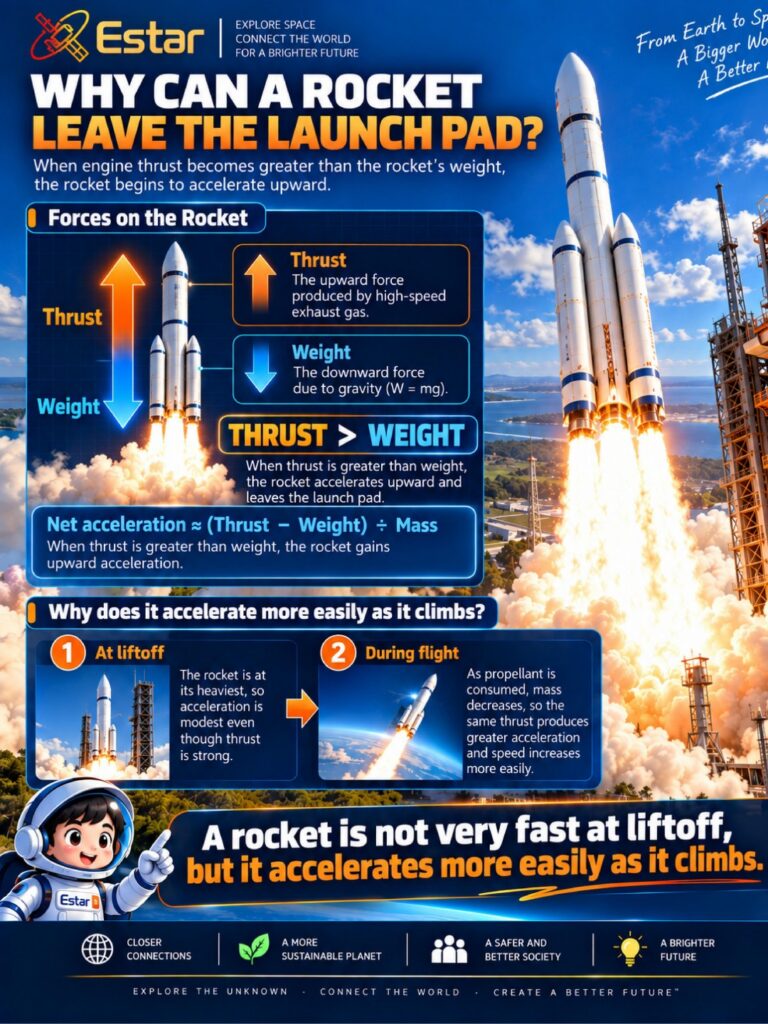
- Ignition & Liftoff: Once all systems clear the automated final countdown checks, the main engines ignite, generating enough thrust to overcome gravity, and the rocket lifts off.
2. Ascent & Multi-stage Separation
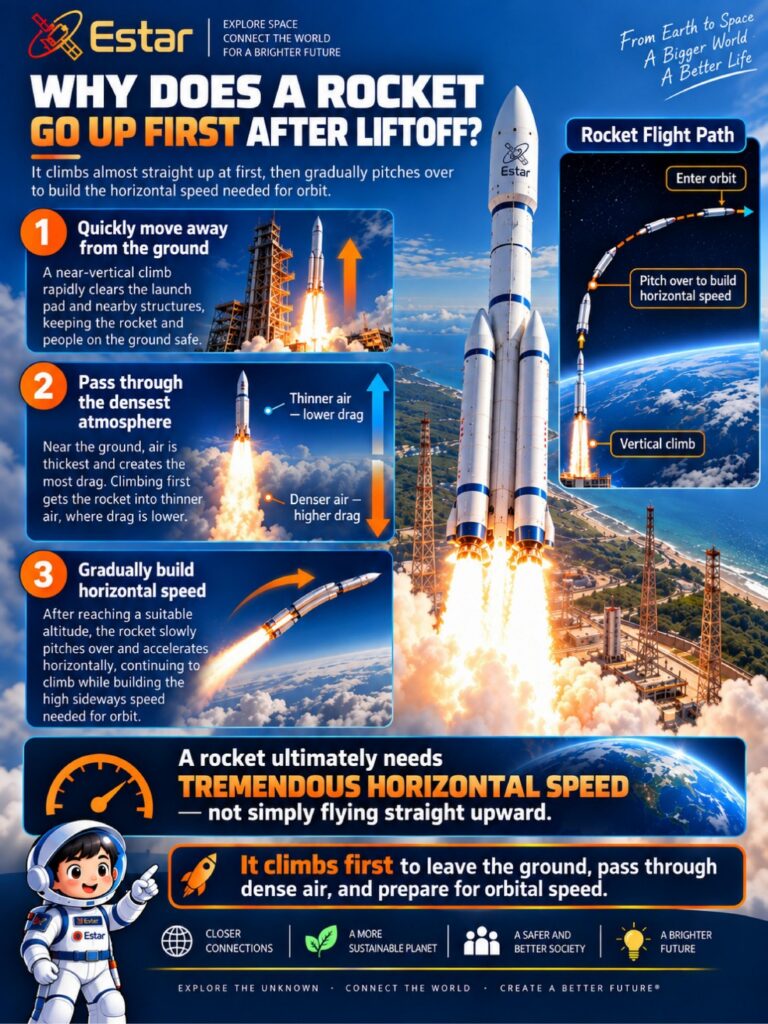
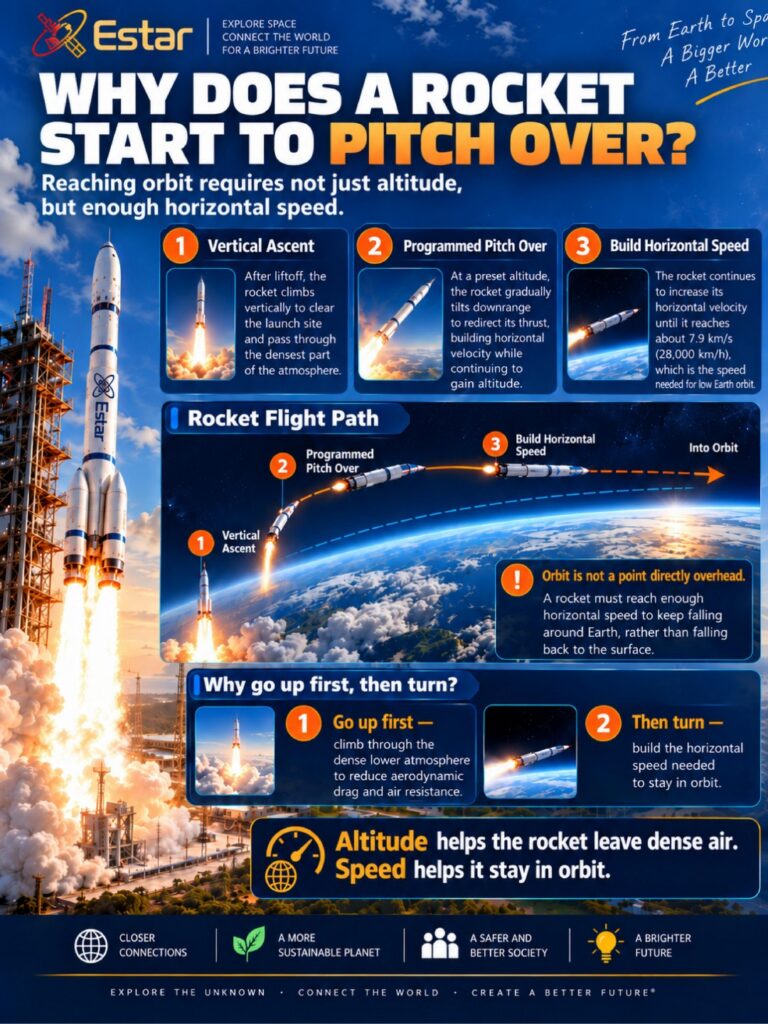
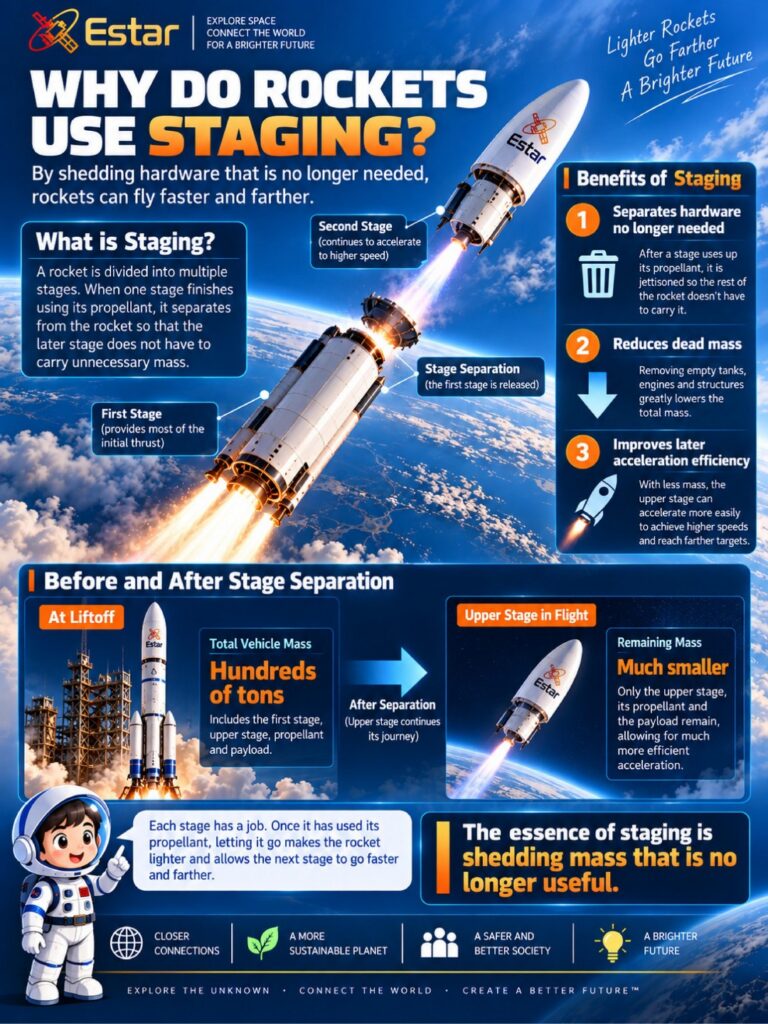
To escape Earth’s gravity and reach orbital speeds, rockets use a “staging” strategy, discarding heavy empty fuel tanks as they fly to reduce weight:
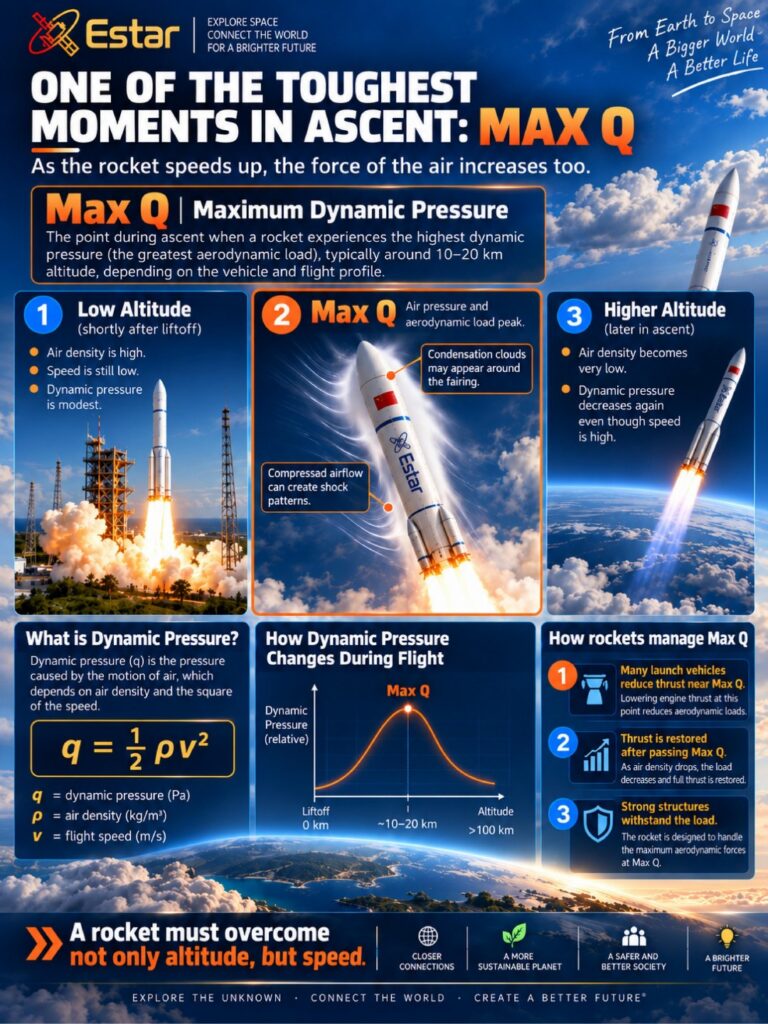
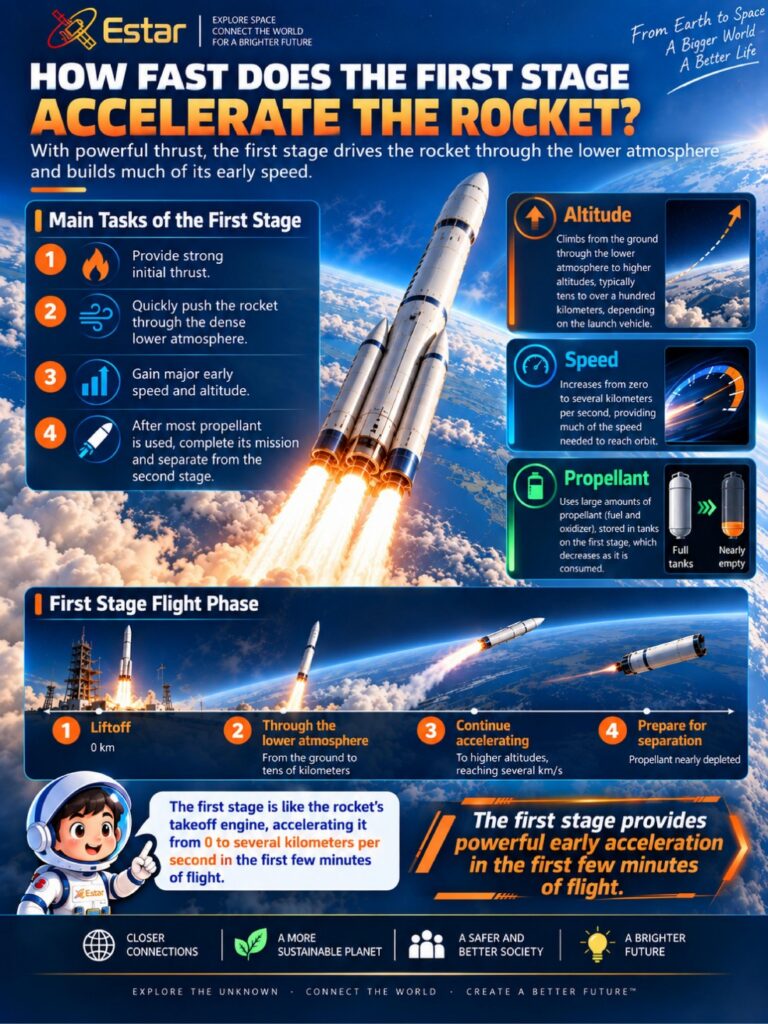
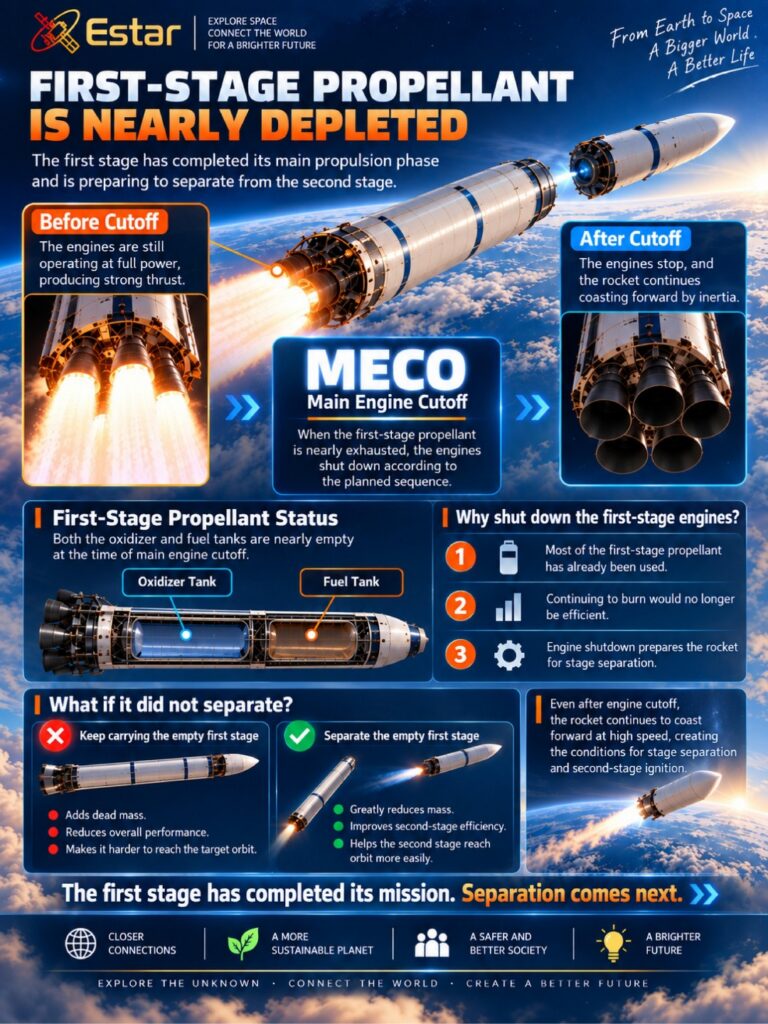
- First-Stage Cutoff & Separation (MECO): The massive bottom section (first stage) provides the initial push through the thickest part of the atmosphere. Once its fuel is spent, the engine shuts down, and the first stage detaches (to fall into the ocean or be recovered/landed).
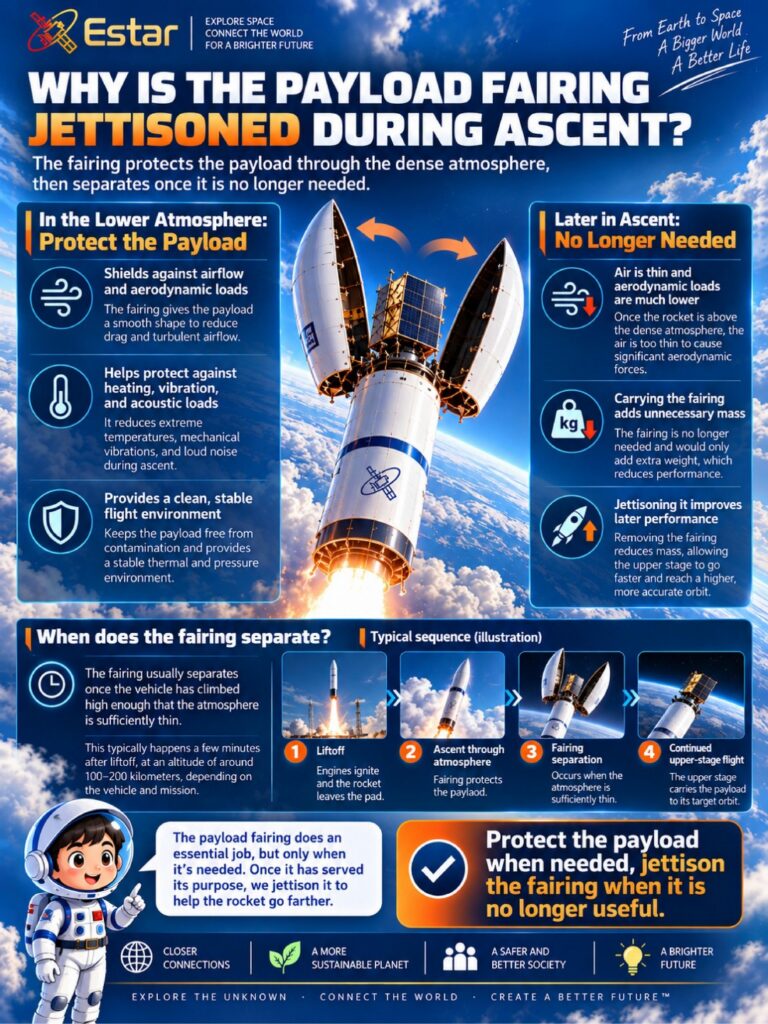
- Fairing Separation: Once the rocket clears the dense atmosphere (usually above 100 kilometers, near the Karman line), atmospheric friction is no longer a threat. The protective nose cone splits open and is discarded to shed unnecessary weight.
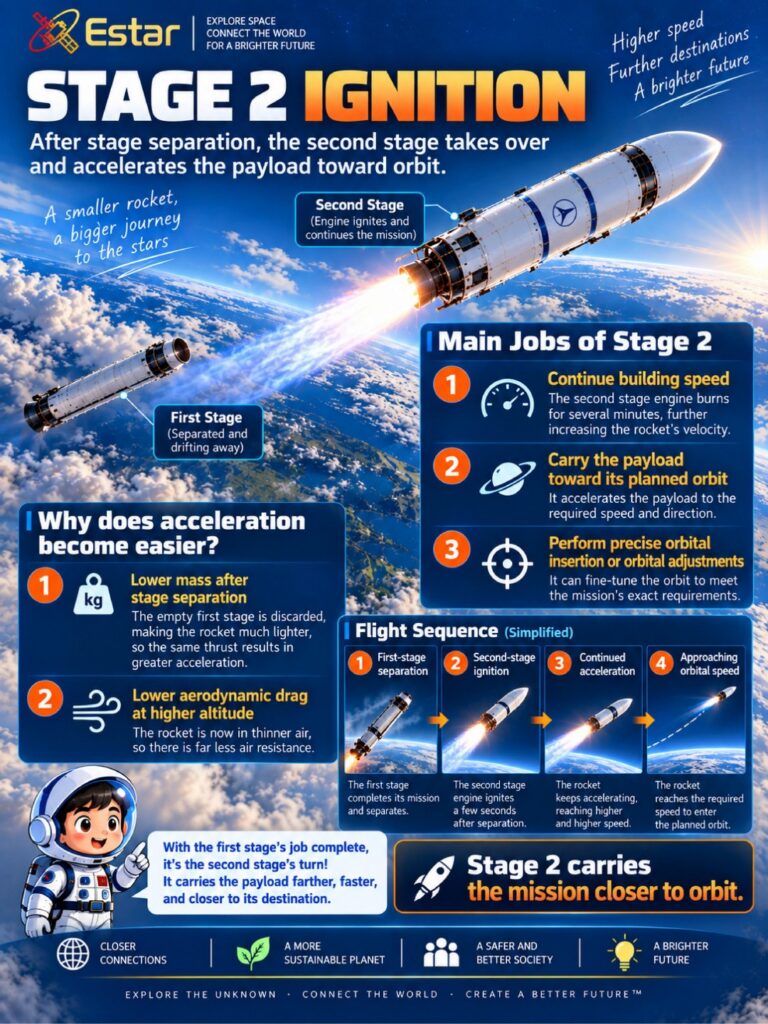
- Second-Stage Ignition: The upper-stage engine ignites immediately after separation, accelerating the satellite further into space.
3. Orbit Insertion & Deployment
This is the final and most critical phase, where precision determines the success of the mission:
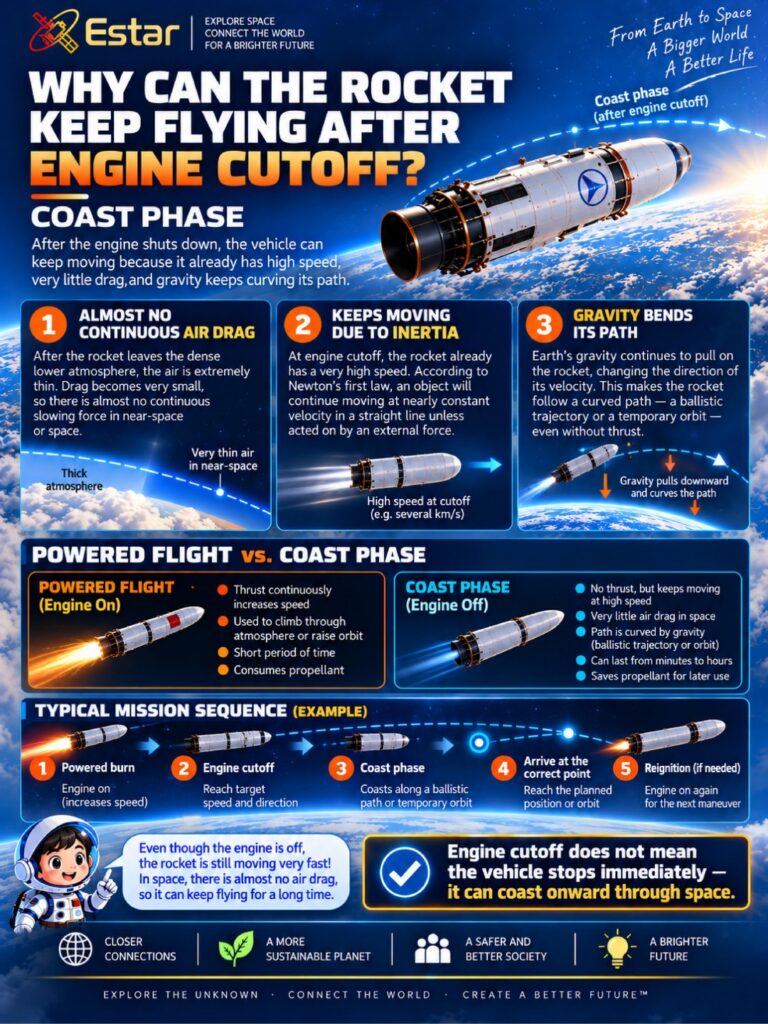
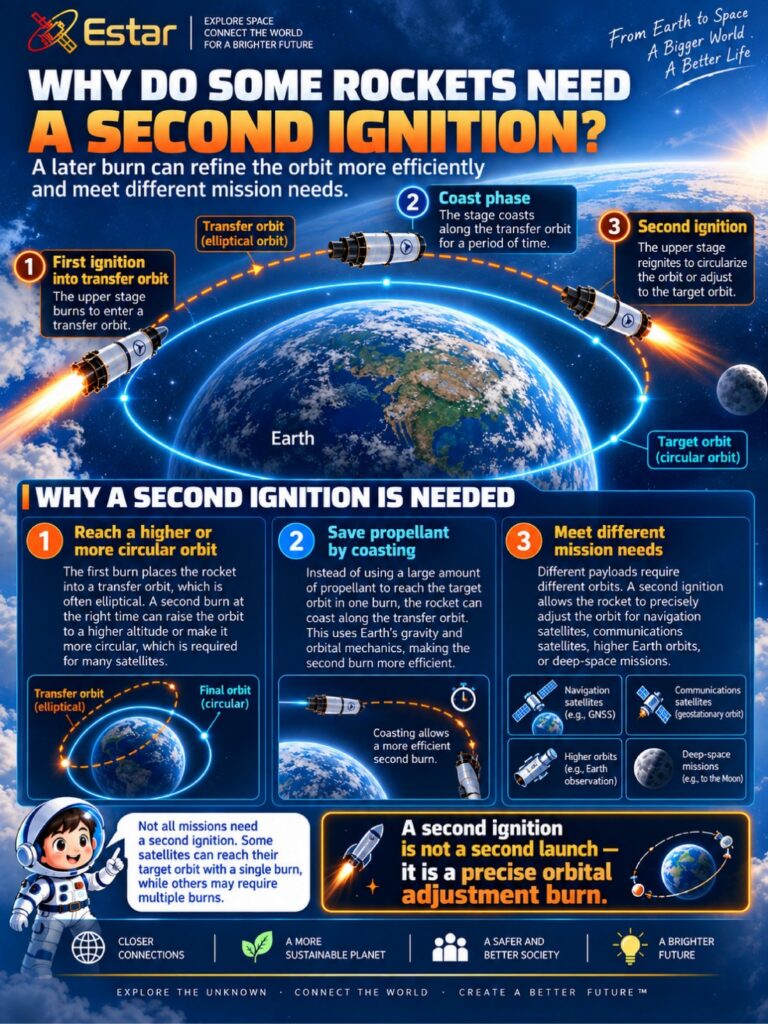
- Coasting Phase: Rockets often don’t burn continuously. The upper-stage engine may shut down temporarily, allowing the vehicle to coast on inertia until it reaches the exact target altitude.
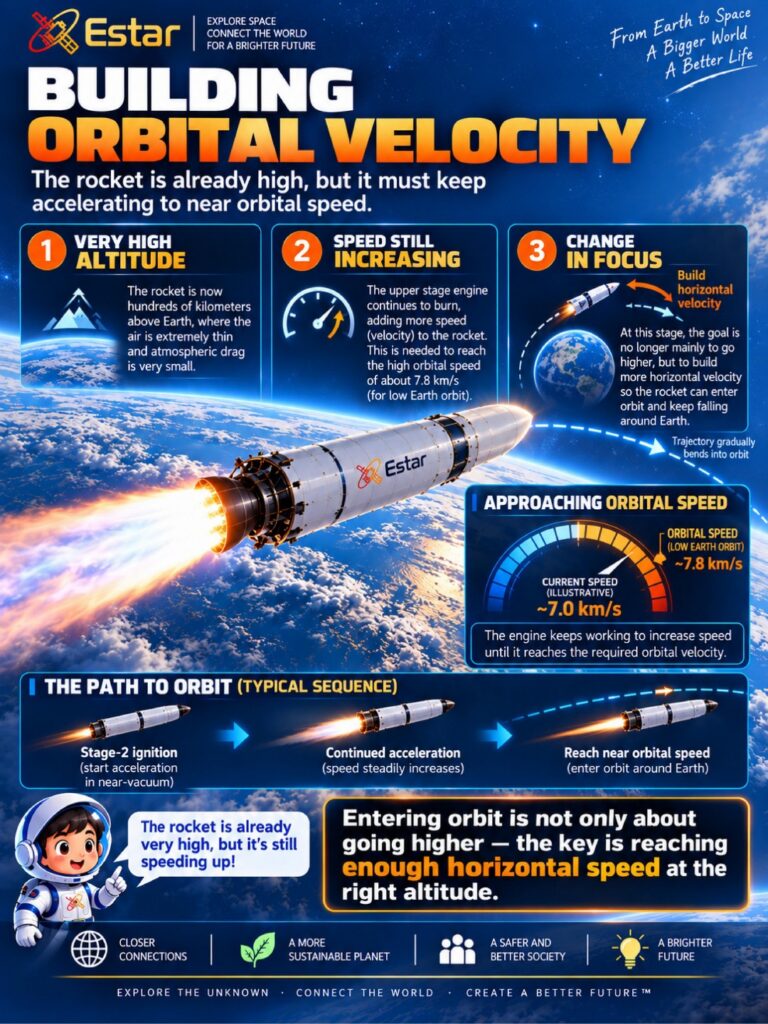
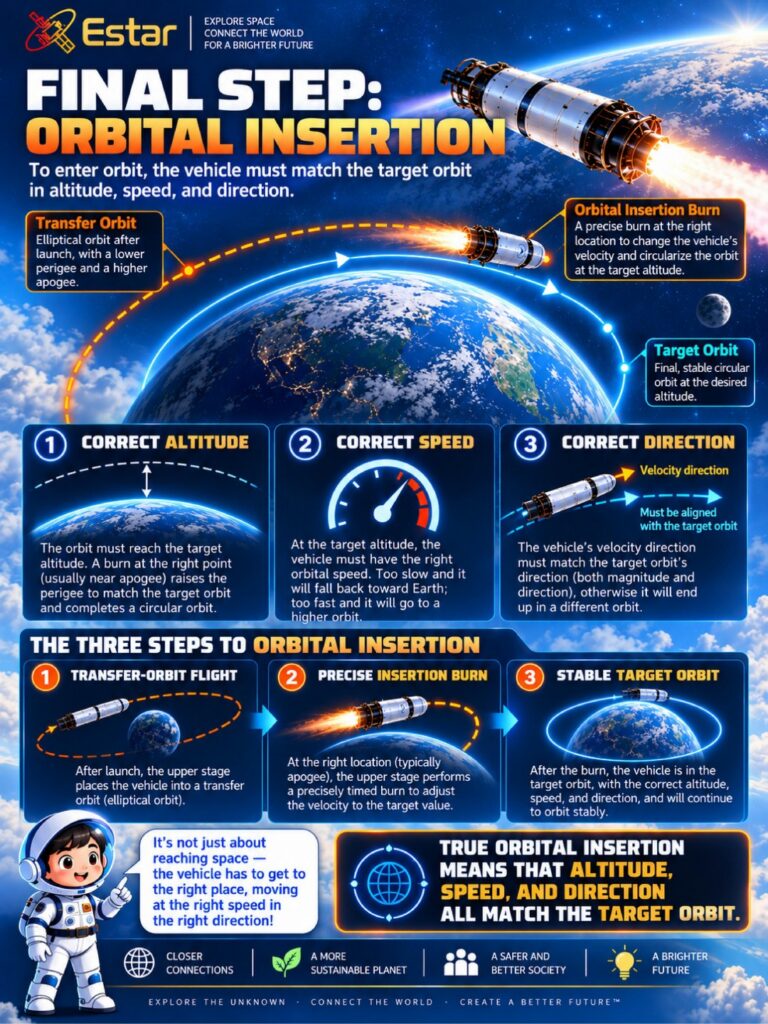
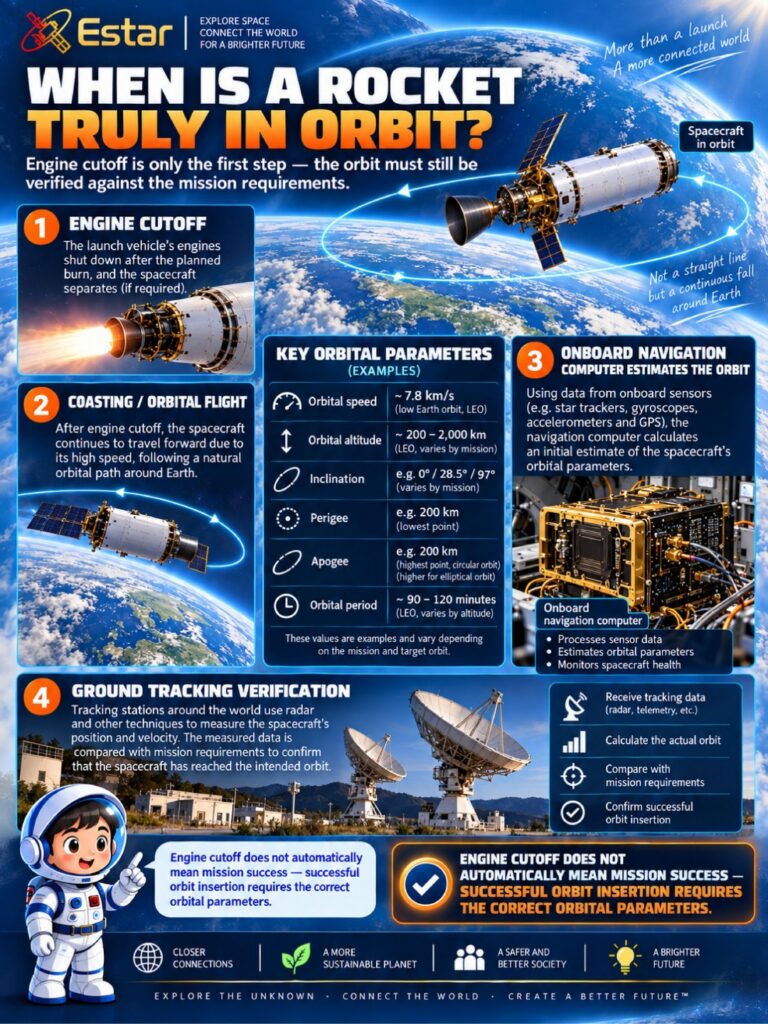
- Final Burn & Attitude Adjustment: The rocket uses small thrusters to adjust its orientation perfectly. If needed, the upper-stage engine reignites to give a final push, accelerating the payload to Orbital Velocity (approx. 7.9 km/s for Low Earth Orbit).
- Payload Separation: Once the precise coordinates, speed, and altitude are achieved, pyrotechnic bolts or mechanical springs release the locking mechanism. The satellite gently separates from the rocket’s final stage—marking its official entry into orbit.
- Satellite Activation: Now on its own, the satellite automatically deploys its solar arrays to harvest power, unfolds its communication antennas, and sends its first “heartbeat” signal back to Mission Control on Earth.