
🛠️ I. Unified AI API Gateway System Architecture
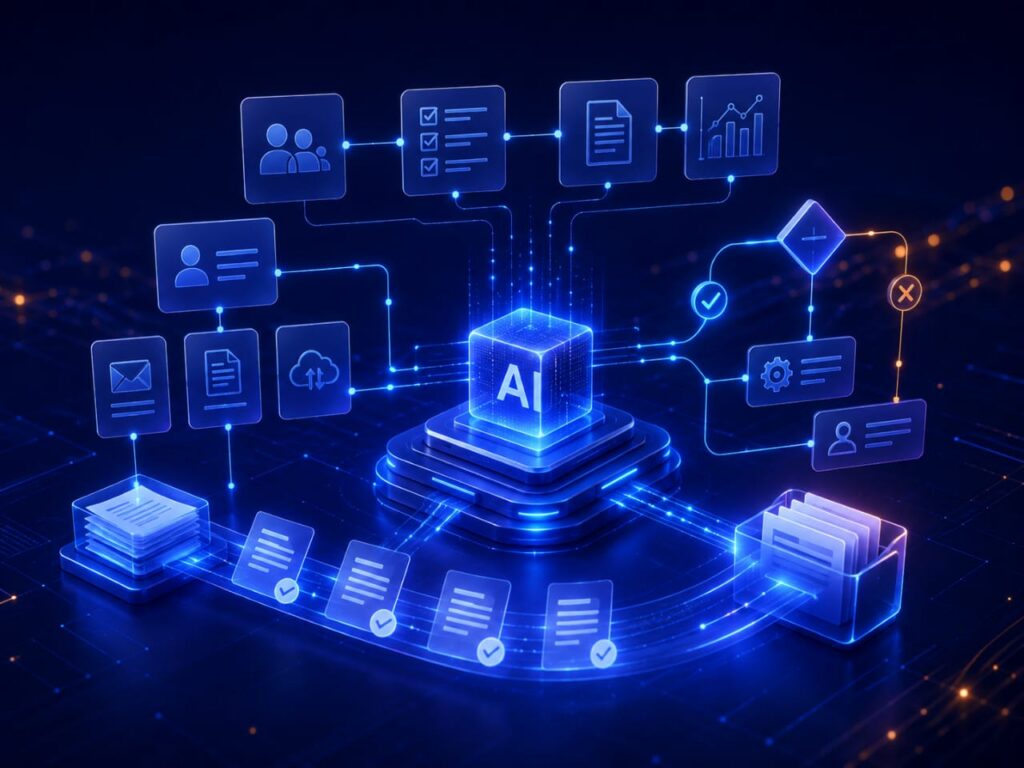
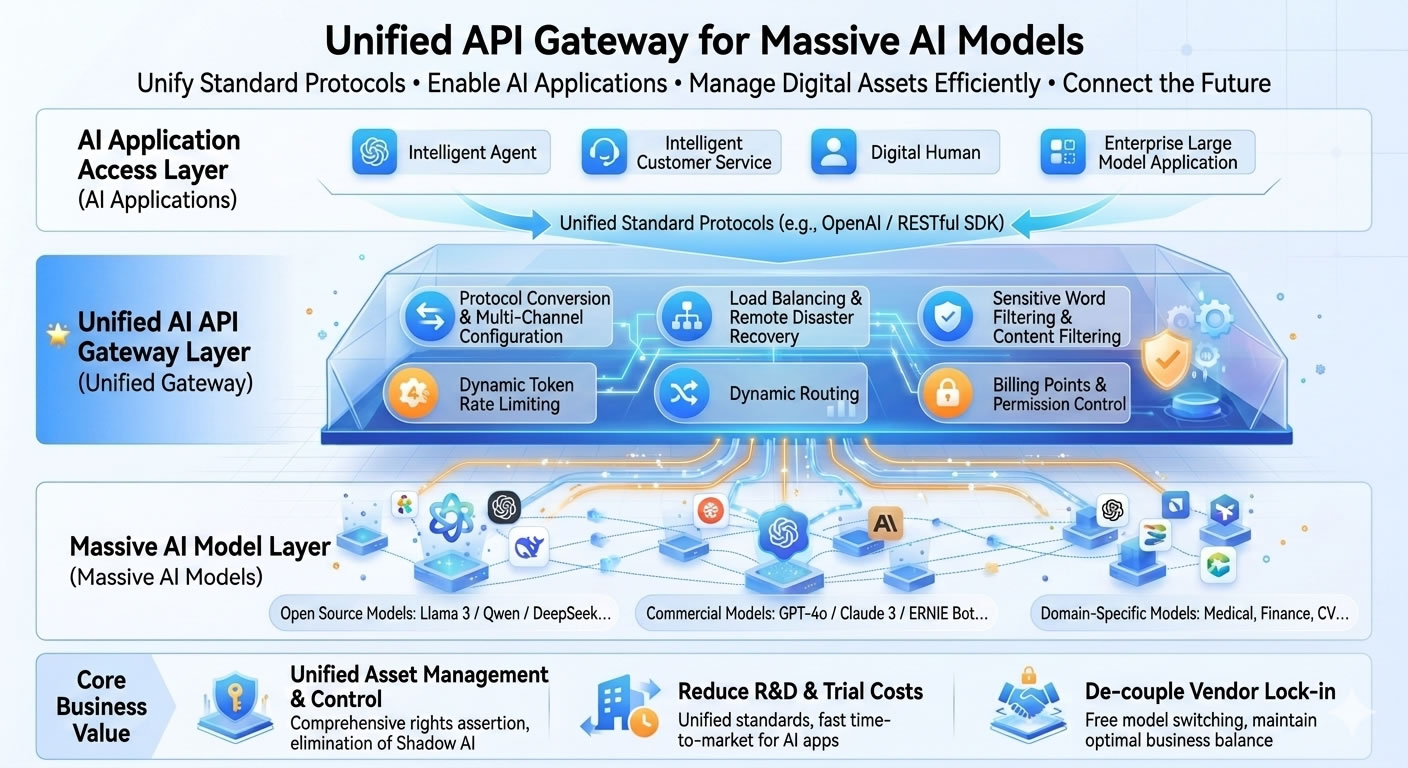
A standard production-grade AI API gateway’s core responsibility is to build a high-concurrency, highly available, manageable, and controllable intelligent central protocol layer between the underlying heterogeneous and massive amounts of basic models (LLMs) and the upper-layer agile AI applications.
📊 II. Core Capability Metrics
To support massive model access and ensure digital asset security, the gateway design needs to focus on the following three capability dimensions:
1. Standard Protocol Conversion: Provide a unified industry-standard API interface (such as native compatibility with the OpenAI SDK), completely shielding the fragmented differences between different underlying frameworks and models from different vendors. Applications only need to modify a single line of BaseURL to achieve seamless model switching.
2. Intelligent Routing and Load Balancing: Faced with massive concurrent requests, the gateway automatically performs intelligent distribution and dynamic circuit breaking based on the health of multiple channels, response time (Time-to-First-Token), and current token balance, ensuring service is never offline.
3. Security and Compliance Barriers: Due to the “illusion” inherent in large language models and potential content compliance risks, the gateway incorporates pre-input security auditing and post-output interception, providing enterprise-level data privacy protection and compliance safeguards.
📈 III. Core Business Value Brought
🛠️ Unified Asset Management, Eliminating the Shadow of Black Market Activities: Centralizing all AI assets across the group and company on a single gateway allows for dynamic insight into the call flow, traffic distribution, and consumption costs of each API key, achieving comprehensive ownership verification of high-value digital assets.
📉 Reduced R&D and Trial-and-Error Costs: Developers no longer need to repeatedly write underlying integration and authentication code for each newly released model, significantly shortening the deployment cycle of AI applications.
🔄 Decoupling Vendor Lock-in: Through abstraction layer design, enterprises can readily switch underlying model services online based on the cost-effectiveness of their business scenarios, maintaining an optimal balance between commercial closed-source and open-source self-control.