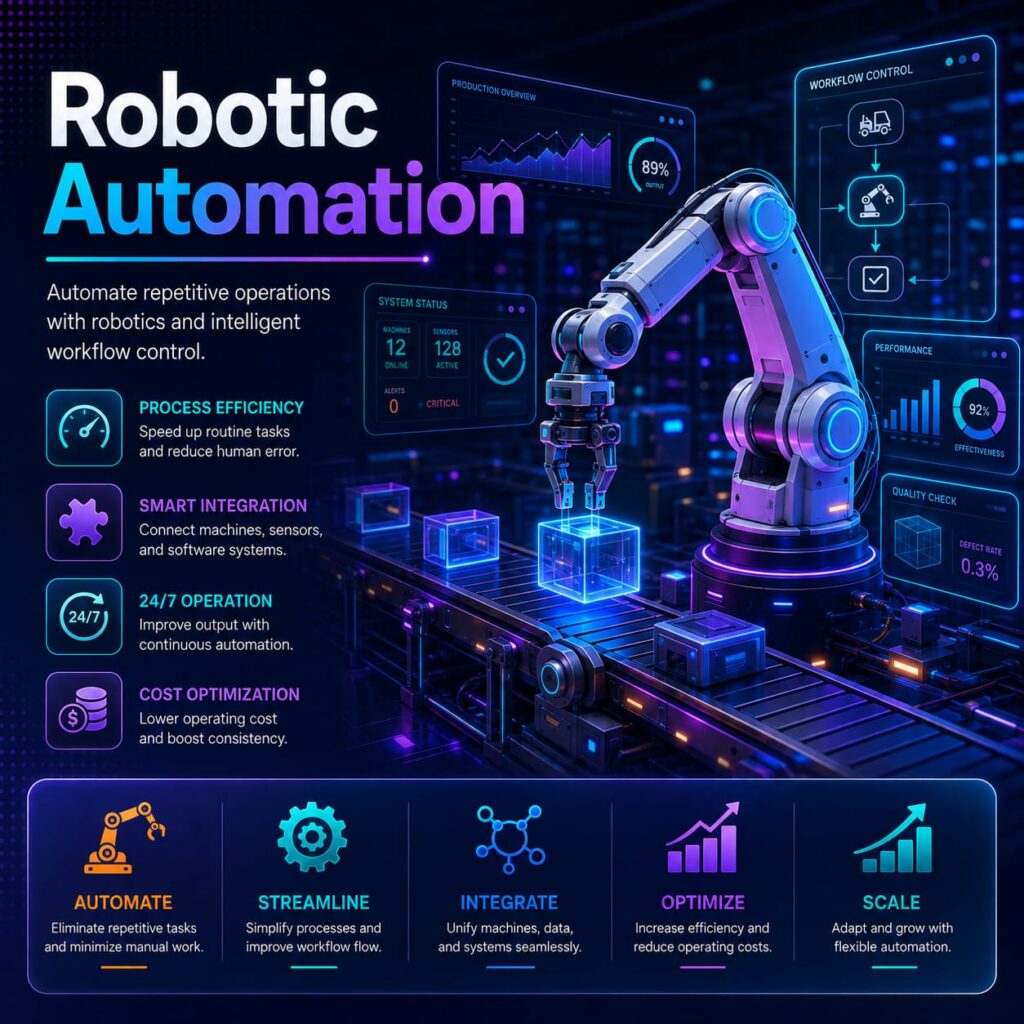

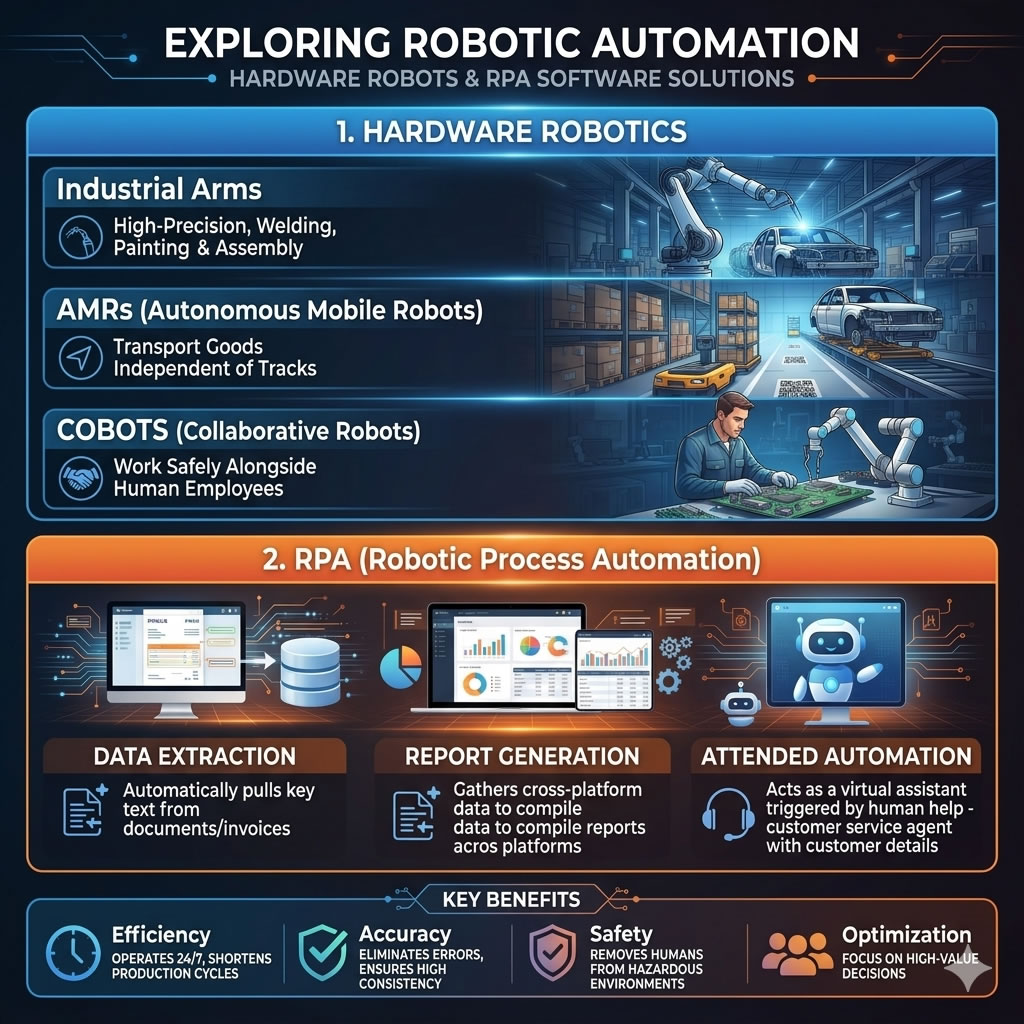

Robotic Automation refers to the technology of using physical robots or software algorithms to automatically execute repetitive, rule-based tasks. It is split into two major categories: industrial hardware robots for tasks like welding and material handling, and Robotic Process Automation (RPA) for software tasks like data entry.
Core Classifications:
- Hardware Robotics
This involves mechanical devices interacting with the physical world, commonly used in manufacturing and logistics.
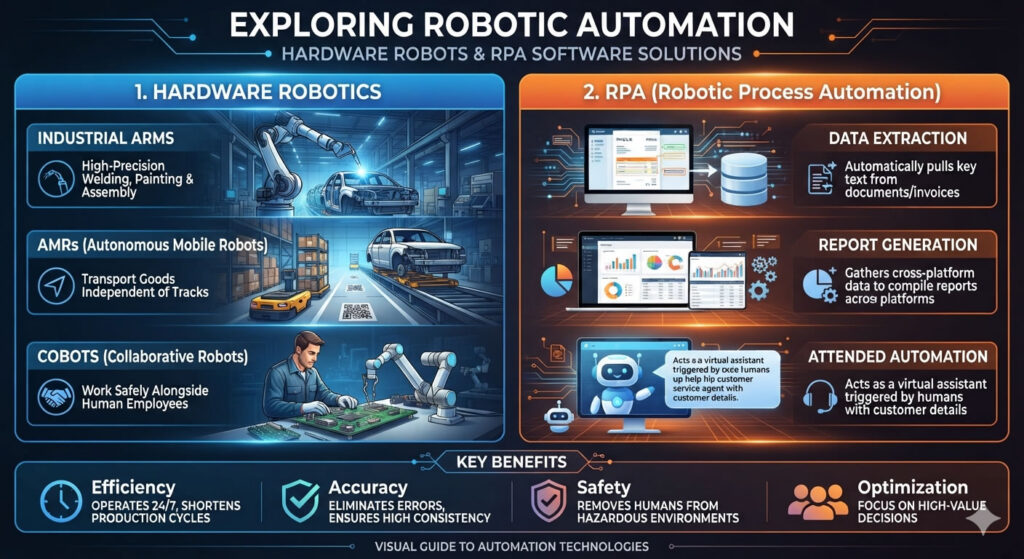
- Industrial Arms: Used for high-precision welding, painting, assembly, and heavy palletizing.
- Autonomous Mobile Robots (AMRs): Navigate warehouses independently to transport goods without floor tracks.
- Collaborative Robots (Cobots): Lightweight robots designed to work safely alongside human employees.
- Software RPA
This form of automation uses software bots to mimic human actions on a computer screen, such as clicking and typing.
- Data Extraction: Automatically pulls key text from invoices and enters it into ERP systems.
- Report Generation: Gathers cross-platform data to compile financial or operational reports.
- Attended Automation: Acts as a virtual assistant triggered by humans to help with customer service.
Key Benefits:
- Efficiency: Operates 24/7 without breaks to shorten production cycles.
- Accuracy: Eliminates human fatigue errors to ensure high data and product consistency.
- Safety: Removes humans from hazardous environments like high heat or toxic areas.
- Resource Optimization: Handles boring tasks so workers can focus on high-value decisions.