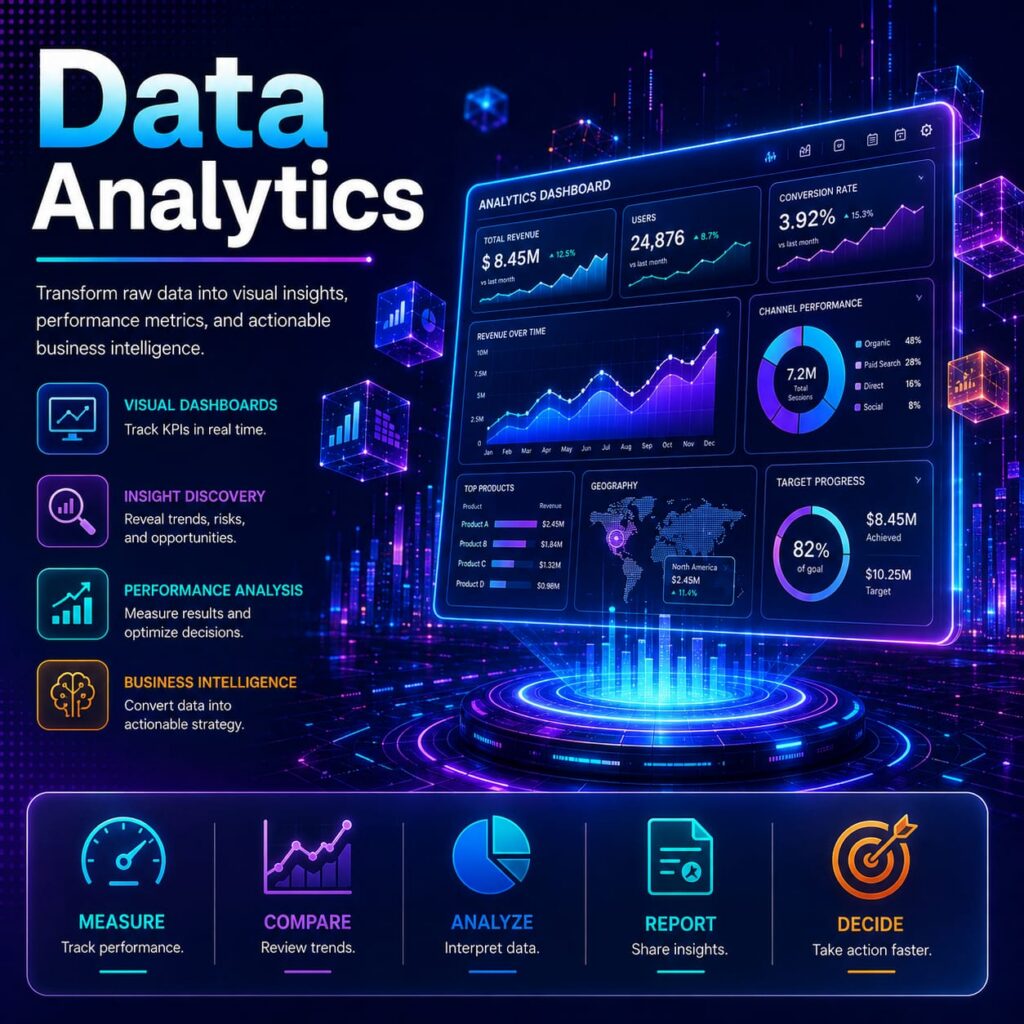

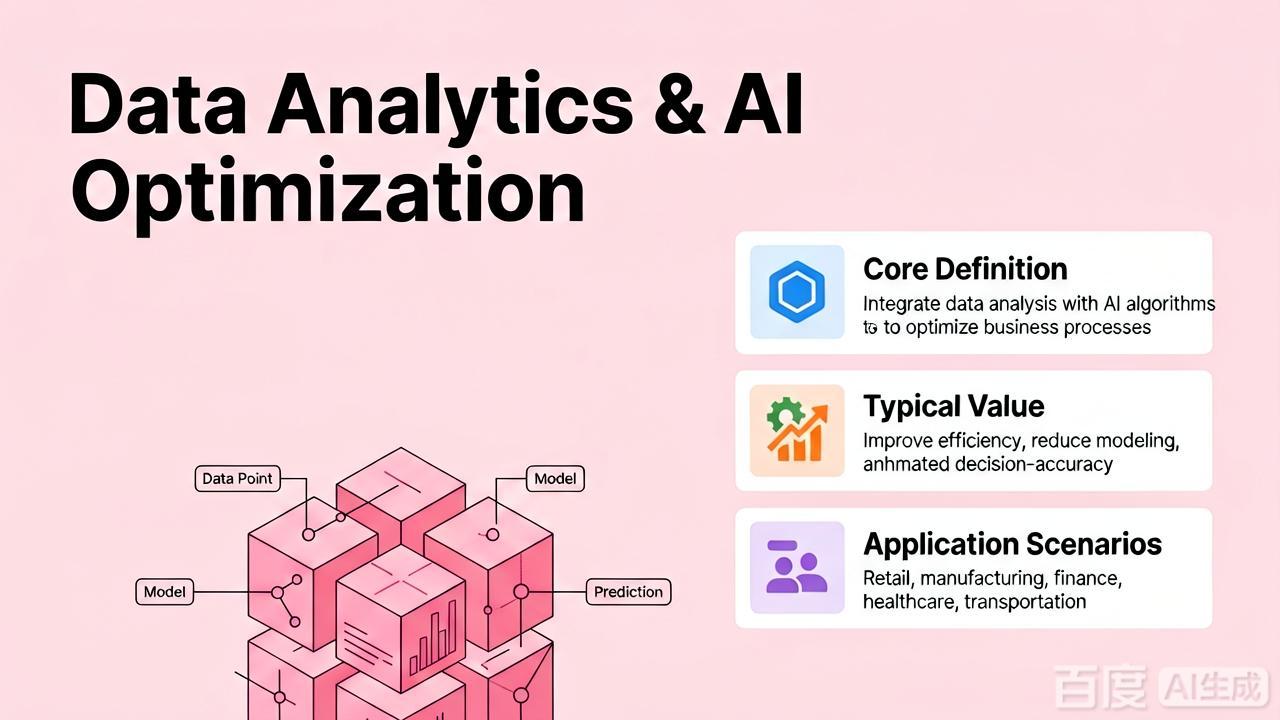

Data analytics refers to the process of cleaning, transforming, modeling, and statistically analyzing massive amounts of raw data to uncover hidden patterns, trends, and insights, transforming these into quantifiable data that drive business and scientific decision-making.
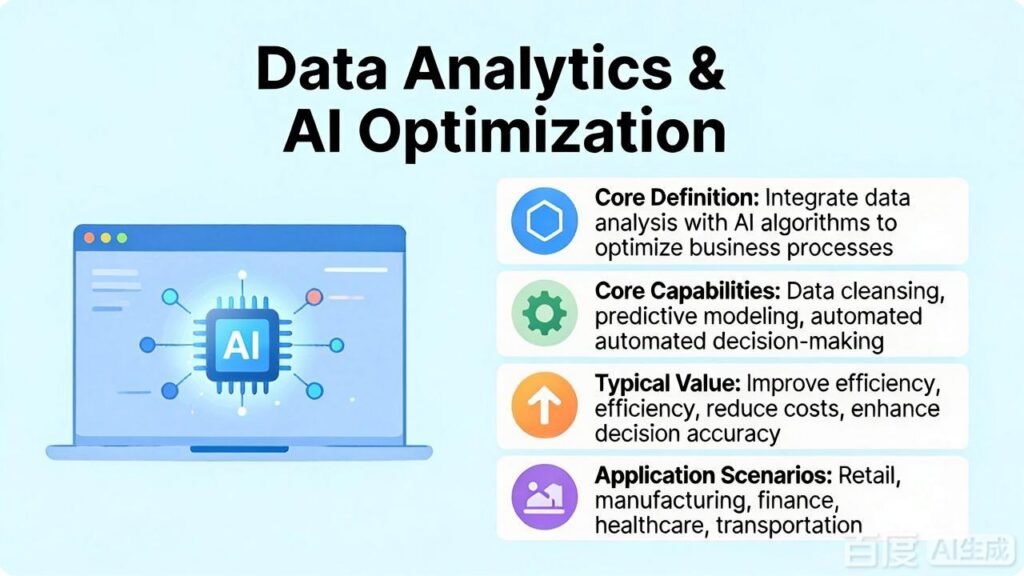
In modern intelligent society, data analytics has been fully integrated with large language models and AI, undergoing a major technological paradigm shift from “post-event statistics” to “pre-event prediction and intelligent decision-making”.
Core Methodologies
Based on the depth of data processing and the ultimate business empowerment goals, data analytics is mainly divided into the following four advanced levels:
- Descriptive Analytics – “What happened?”
- By statistically analyzing, integrating, and visualizing historical data, it provides an intuitive review of past business performance.
- Typical scenarios: Monthly financial statements for enterprises, real-time GMV dashboards for e-commerce promotions, and daily active user (DAU) statistics for websites.
- Diagnostic Analytics – “Why did this happen?”
- Utilize drill-down analysis, correlation analysis, and data mining techniques to identify the underlying causes of fluctuations in business data.
- Typical scenarios: Investigating the reasons for a sudden drop in product sales; funnel analysis of a surge in app user churn.
- Predictive Analytics – “What will happen in the future?”
- Combining historical data, time series algorithms, and machine learning models to scientifically predict future market trends or behaviors.
- Typical scenarios: Forecasting next quarter’s sales; real-time interception of fraudulent credit card transactions; predictive maintenance for equipment malfunctions.
- Prescriptive Analytics – “What should we do?”
- The highest level of data analysis. Utilize operations research algorithms and AI simulation technology to automatically provide optimal action plans and decision-making suggestions.
- Typical scenarios: Real-time route planning for autonomous vehicles; dynamic pricing algorithms for ride-hailing platforms; optimal inventory replenishment strategies for the supply chain.
Key Industrial Applications
- Business Intelligence & Retail: Achieve precise personalized recommendations by building user profiles and analyzing store browsing heatmaps/traffic flow; optimize shelf displays and bundled marketing using product correlation analysis (e.g., the classic “beer and diapers” case).
- Finance & Risk Management: Analyze massive amounts of credit card transaction data, geographic location, and merchant type in milliseconds to automatically identify and block fraudulent transactions; automatically assess loan applicants’ credit limits through credit risk modeling.
- Smart Cities & Logistics: Analyze citywide road network traffic flow and sensor data in real time to autonomously and dynamically adjust traffic light timings to alleviate congestion; automatically optimize cross-border freight and last-mile delivery routes at the logistics end.
- Product Growth: Quantitatively evaluate the effectiveness of new features or interfaces using A/B testing; accurately identify high-risk churned users and automatically trigger retention mechanisms through user retention models and lifecycle analysis.