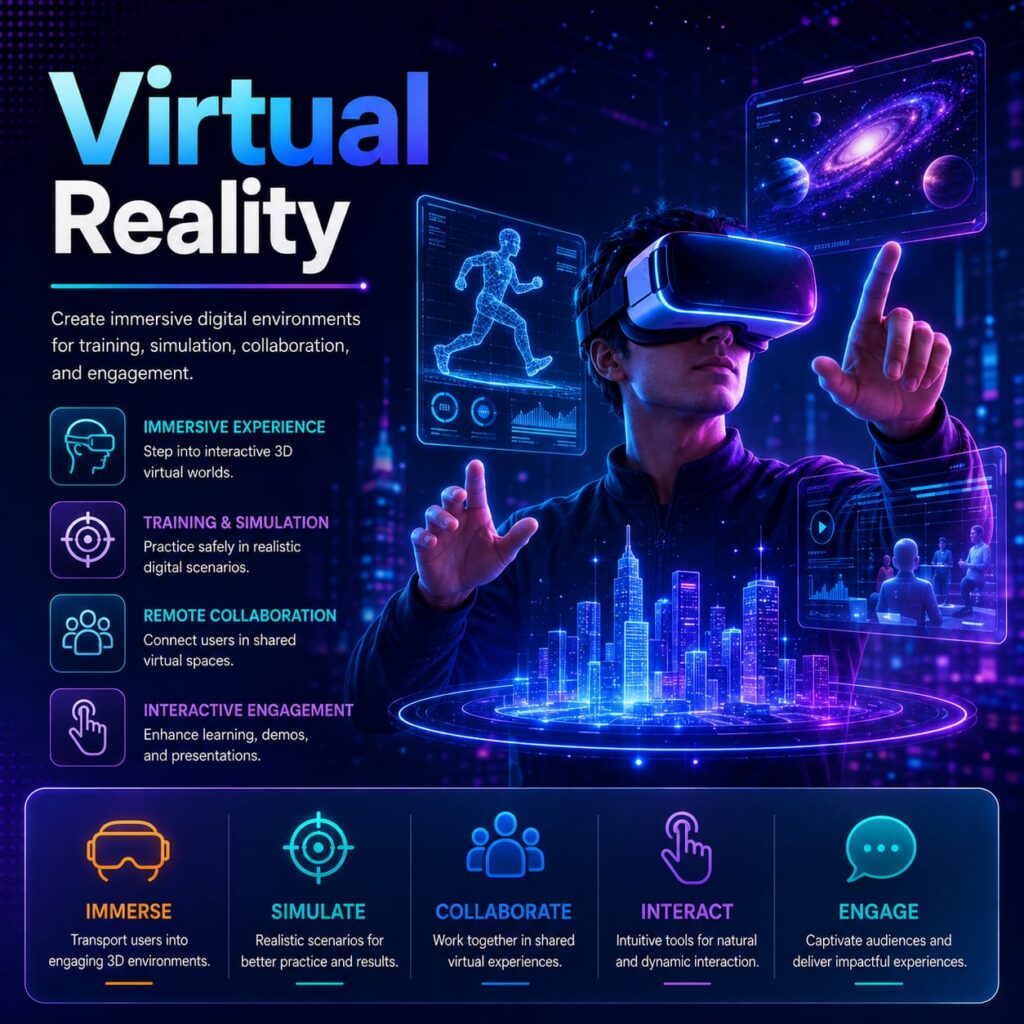

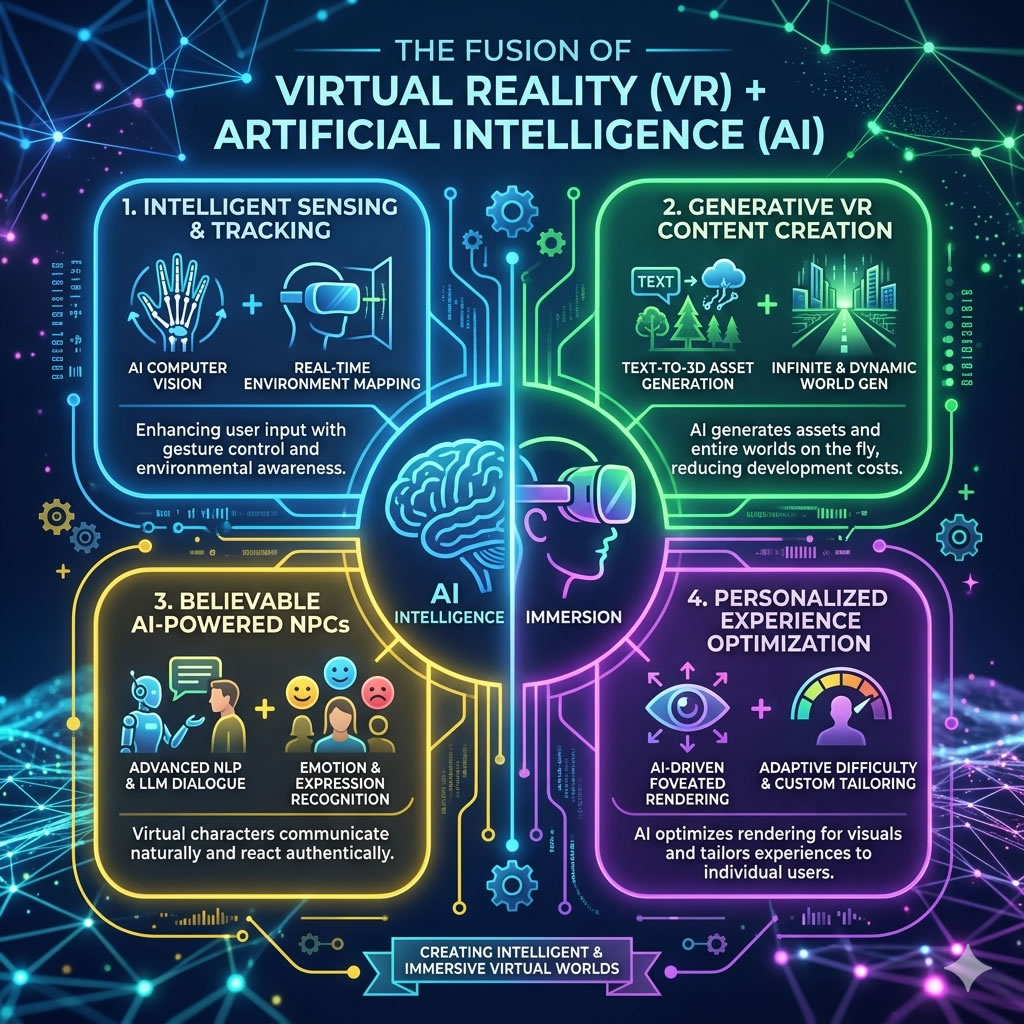

When virtual reality meets artificial intelligence (VR + AI), this technological convergence is transforming the previously fixed and “rigid” 3D space into an “intelligent, living world” capable of real-time perception, understanding, and deep two-way interaction with users.
In traditional VR, scenes and NPCs are pre-coded; however, the injection of AI gives the virtual world a true “soul” and “high adaptability.”
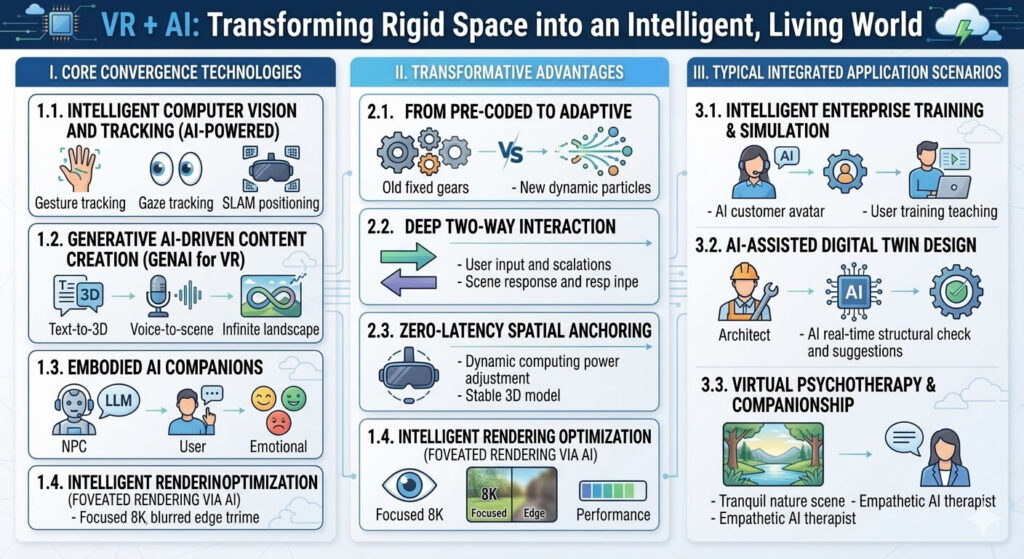
Core Convergence Technologies
- Intelligent Computer Vision and Tracking (AI-Powered Tracking)
- Gesture and Eye Tracking: Utilizing AI algorithms to identify hand skeletal joint nodes in real time, completely eliminating the need for physical controllers, allowing for precise manipulation through hand pinching and grasping.
- Spatial Positioning (SLAM): AI helps the headset’s cameras more quickly identify the edges of walls and furniture in the surrounding environment, ensuring zero-latency, high-precision spatial anchoring even in complex physical environments.
- Generative AI-Driven Spatial Content Creation (GenAI for VR Content)
- One-click 3D asset generation from text/voice: Creators simply input text or speak a sentence, and AI can automatically render a high-precision 3D model or an entire virtual forest within seconds, significantly reducing development costs.
- Unlimited dynamic scene generation: The world is no longer a rigid boundary. AI can generate new virtual environments in real-time and infinitely in front of the player’s line of sight based on their exploration direction.
- Embodied AI Companions
- Lived with a large language model: NPCs in the virtual world utilize a large language model similar to ChatGPT, supporting unscripted, completely free voice conversations with users.
- Intelligent behavioral feedback: Virtual characters not only speak but also display realistic eye contact, smiles, or subtle facial expressions such as sadness, based on the user’s tone, intonation, and facial expressions.
- Intelligent Rendering Optimization (Foveated Rendering via AI)
- Eye-tracking prediction: AI accurately predicts which pixel on the screen a user is looking at.
- Dynamic computing power allocation: Only the core area being looked at is rendered in ultra-high definition 4K/8K, while the edges of the gaze are blurred. This can reduce hardware computing power load by up to 50% or more without compromising visual quality.
Typical integrated application scenarios
- Intelligent enterprise training and simulation: Create AI virtual customers with unlimited patience. Customer service or sales personnel can wear VR headsets to practice personalized sales techniques with AI-controlled customers of various personalities and temperaments.
- AI-assisted digital twin design: When architects or car designers stretch models in a VR environment, AI performs real-time structural mechanics balance calculations, wind resistance tests, or material and lighting simulations in the background, and provides modification suggestions.
- Virtual Psychotherapy and Companionship: By constructing a tranquil virtual natural environment, and in conjunction with an AI virtual psychologist with deep empathy, users can be provided with immersive stress relief, mindfulness guidance, or post-traumatic stress disorder (PTSD) exposure therapy.