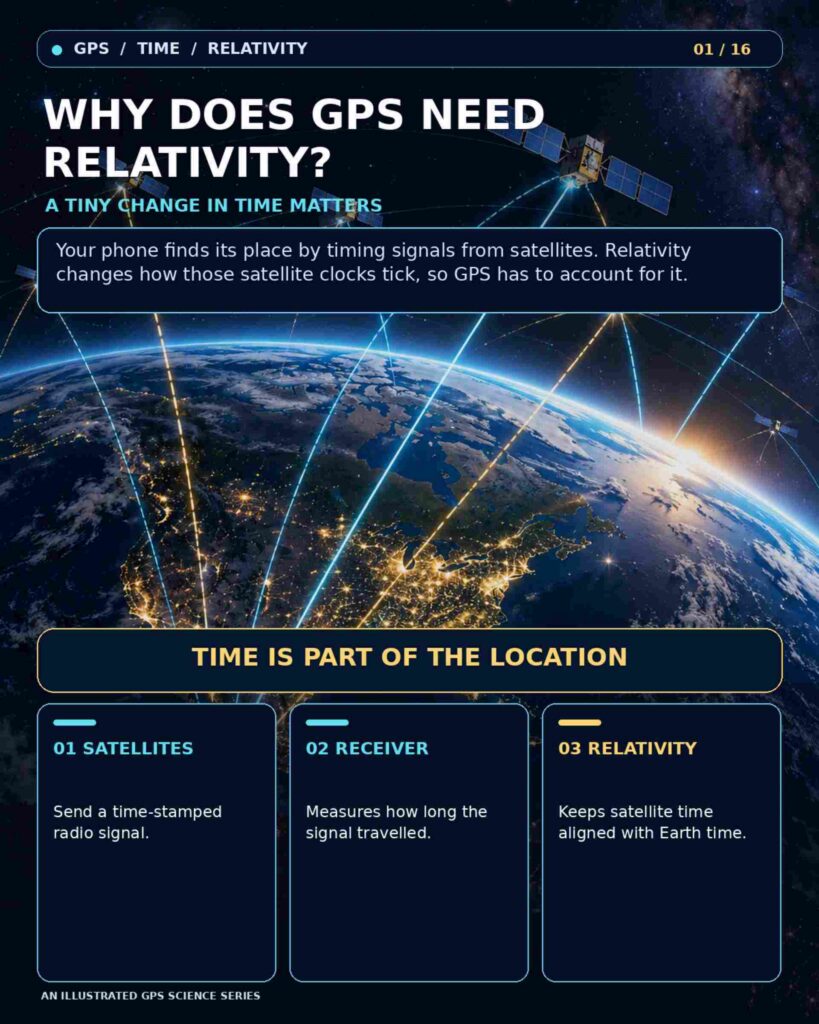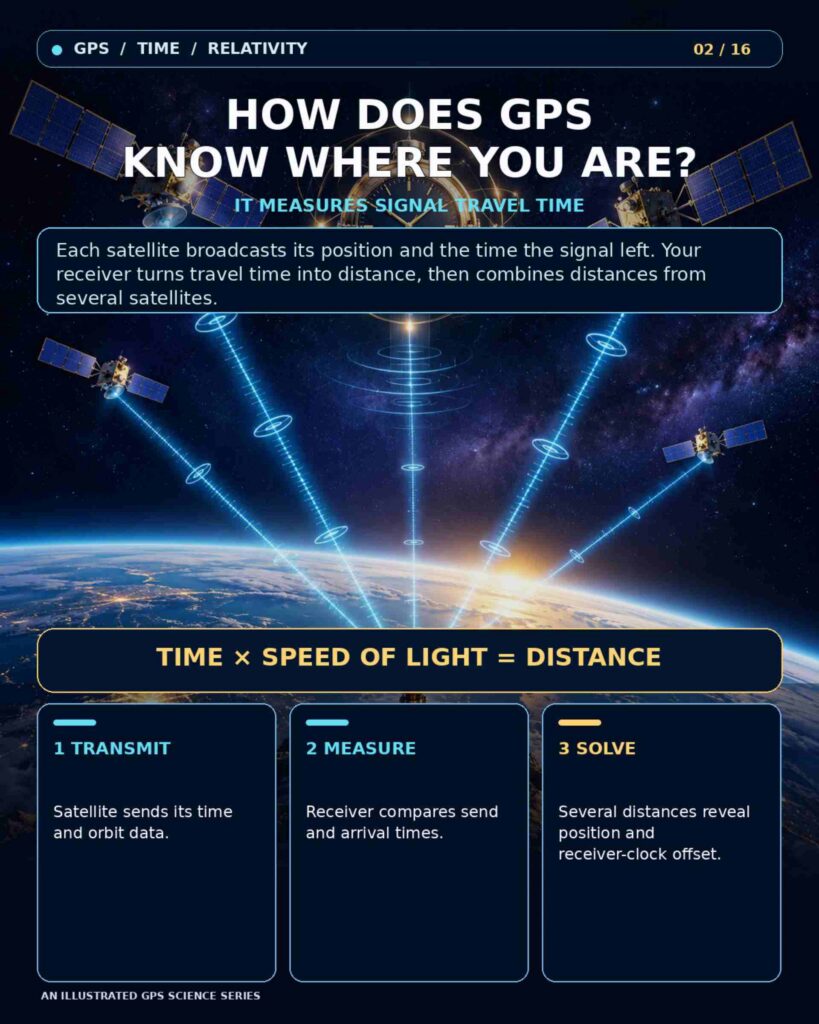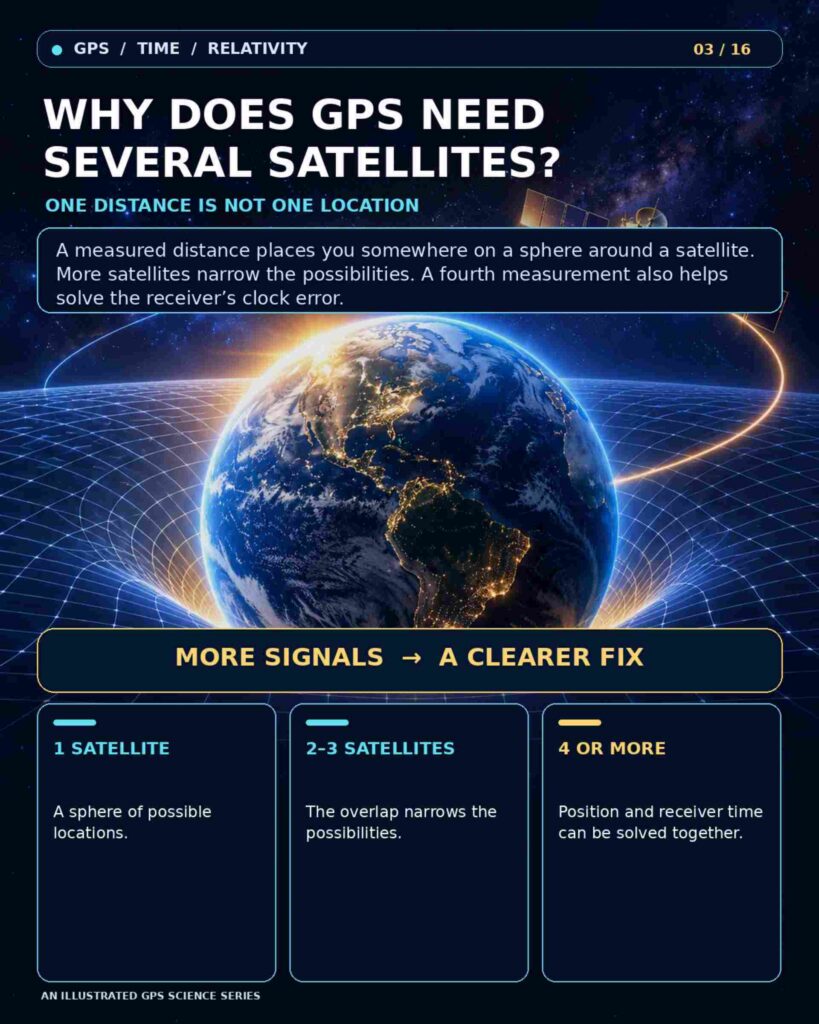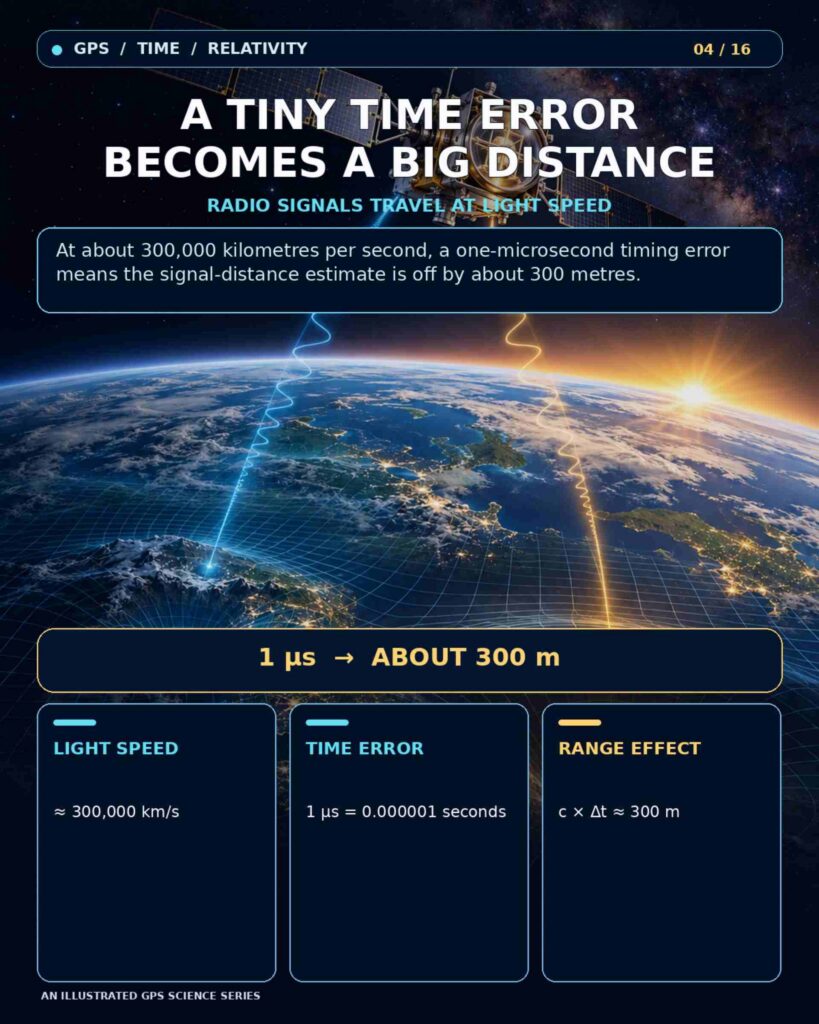

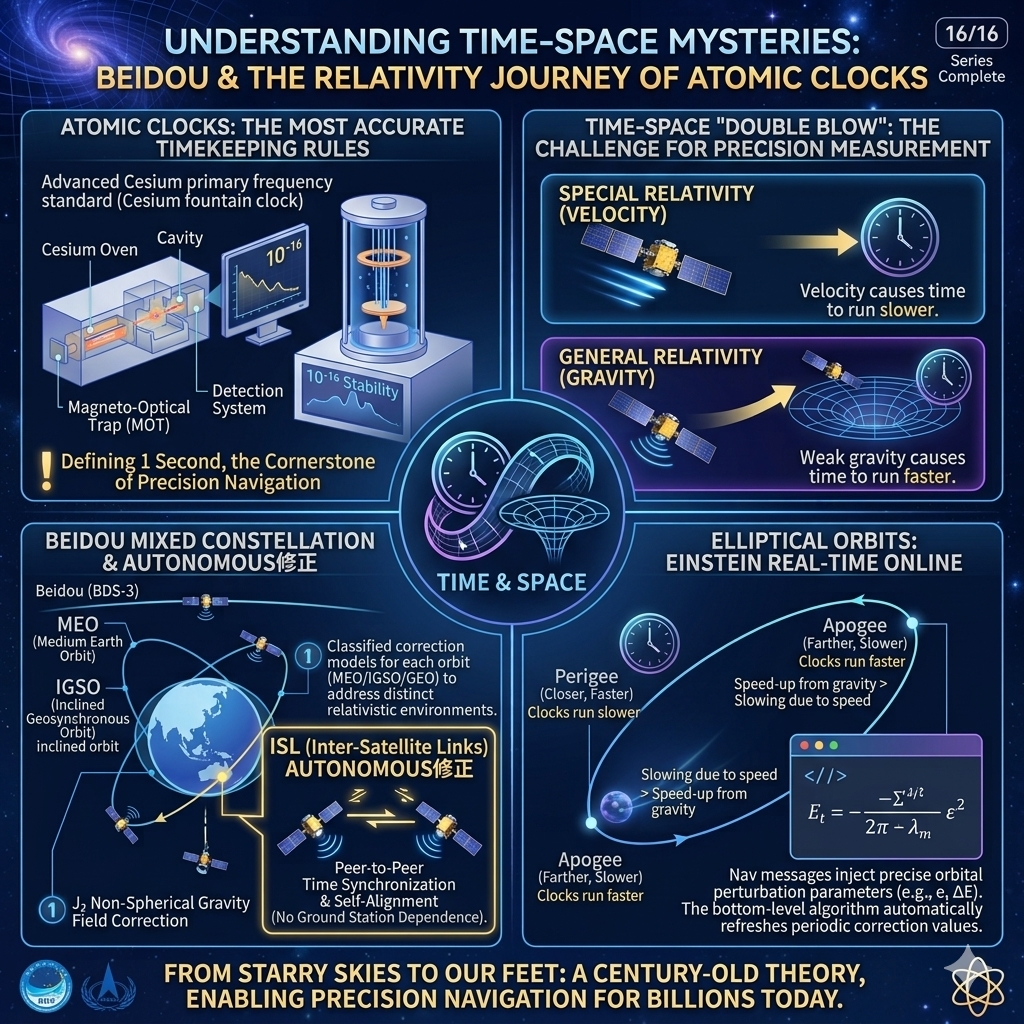

Satellite navigation systems, such as GPS and China’s BeiDou (BDS), are essentially high-precision spatial time-transfer and ranging systems, where Einstein’s theory of relativity serves as the definitive physical cornerstone ensuring centimeter-level positioning accuracy.
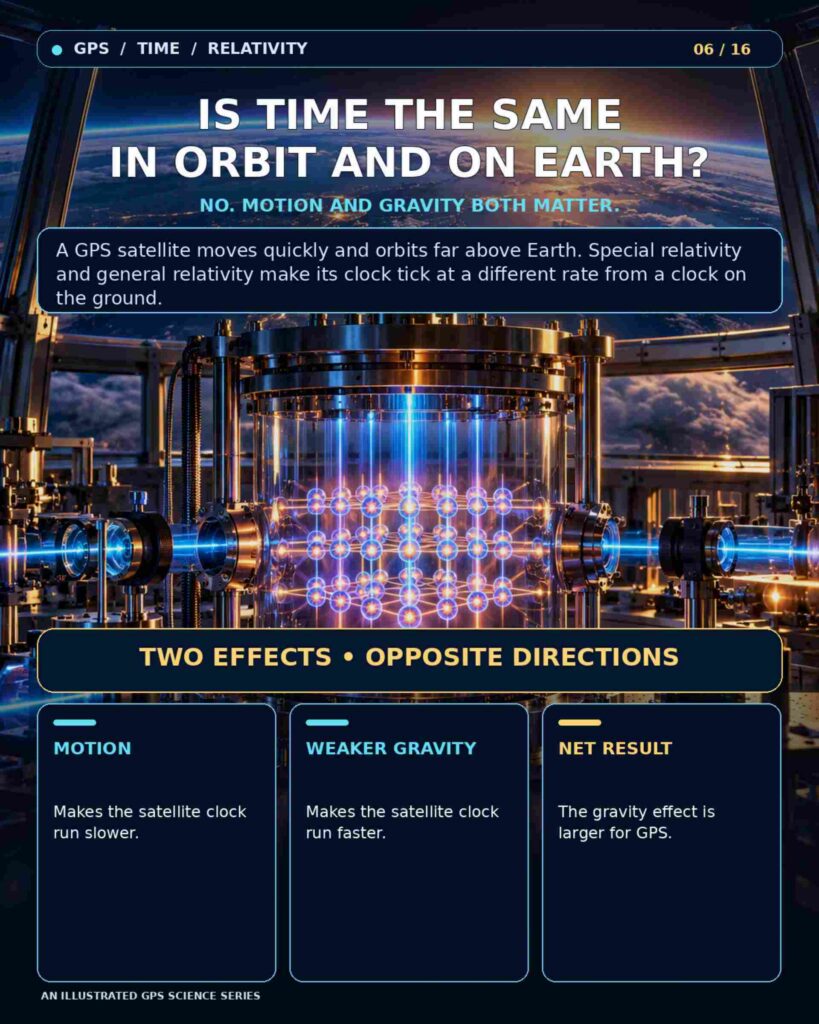
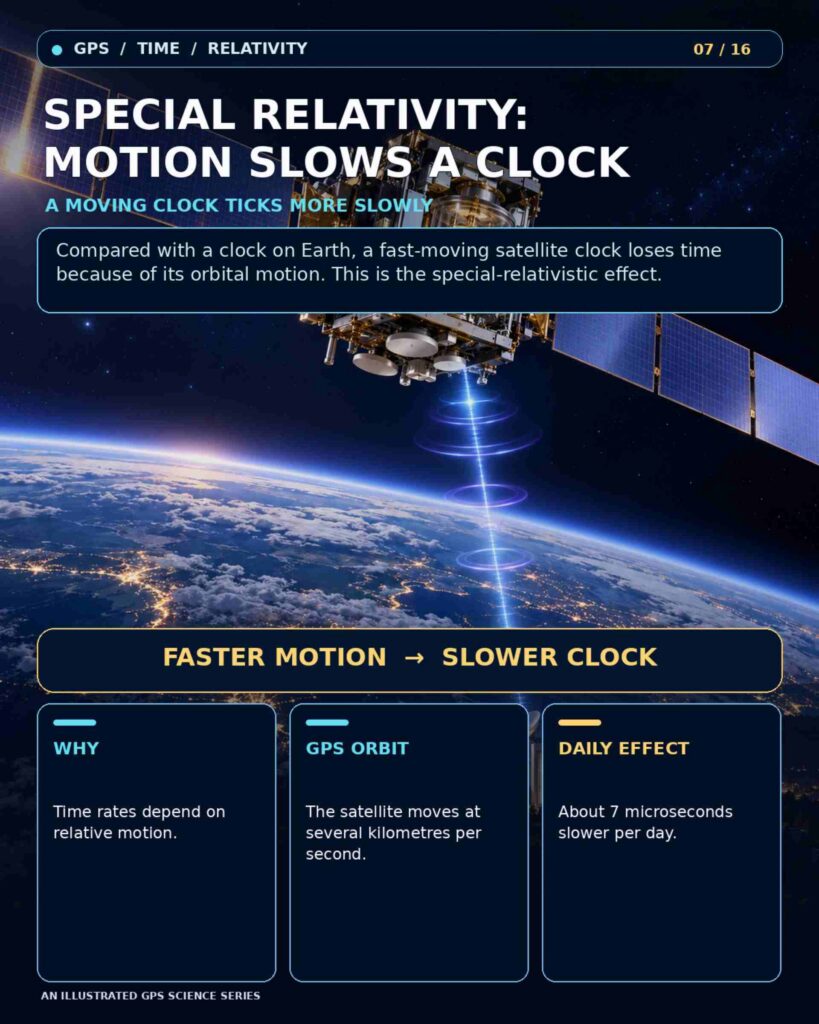
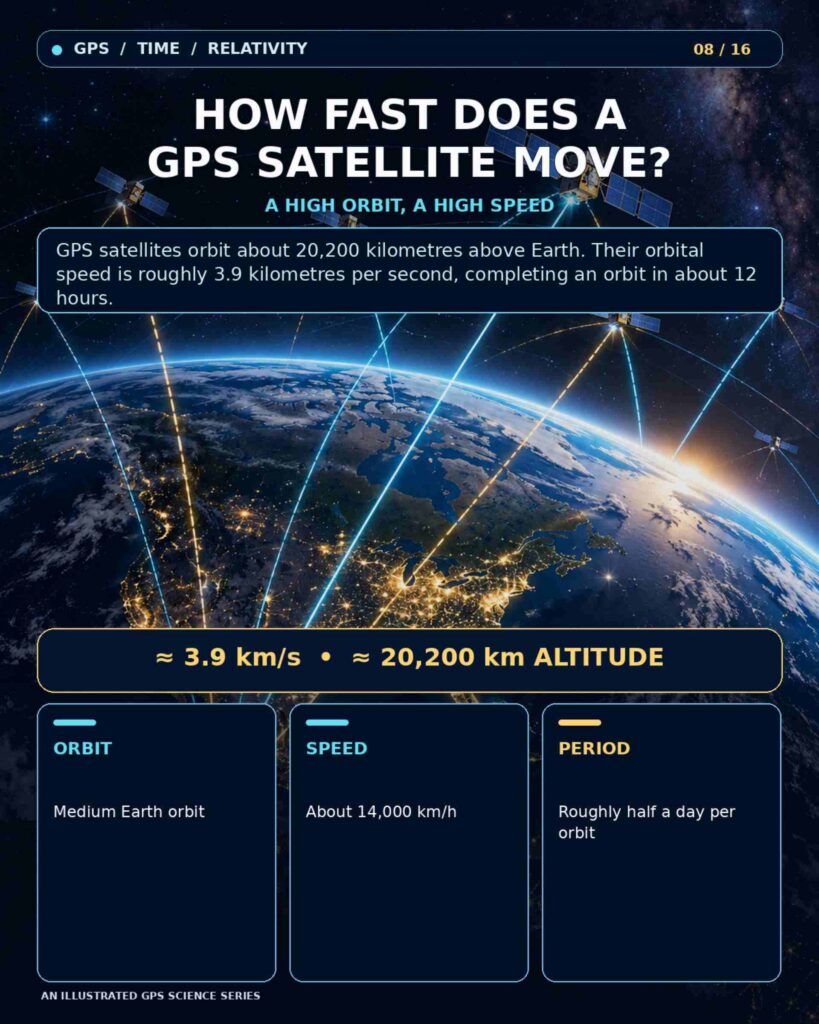
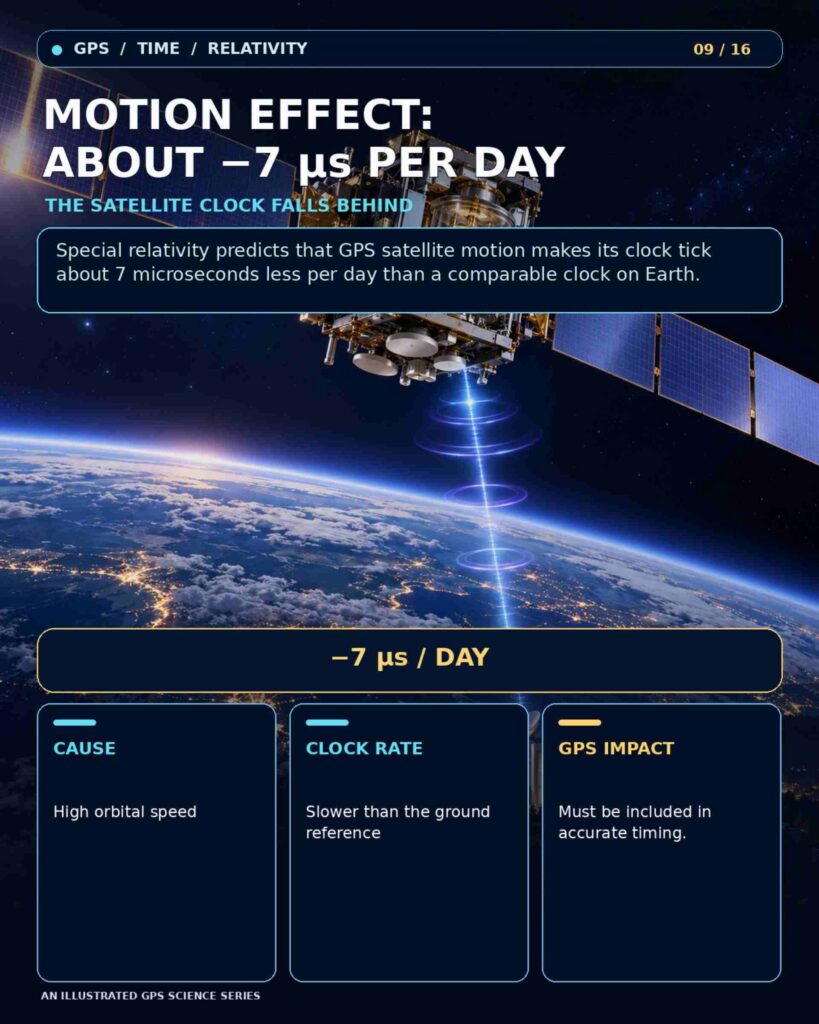
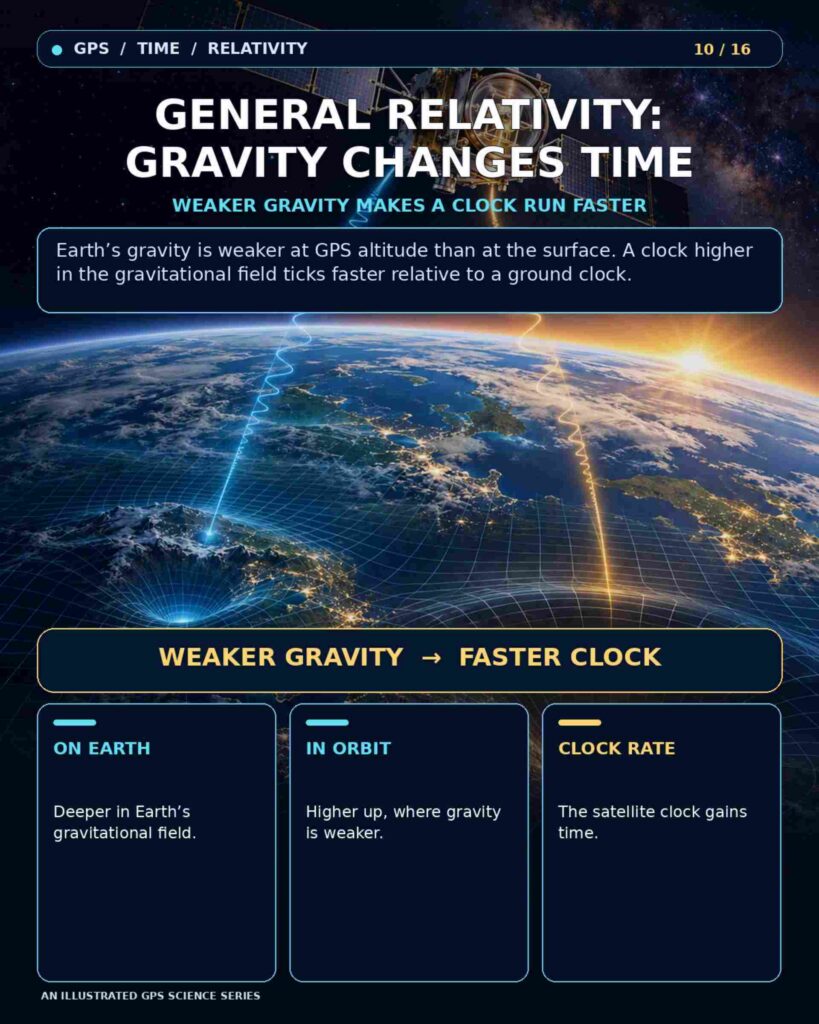
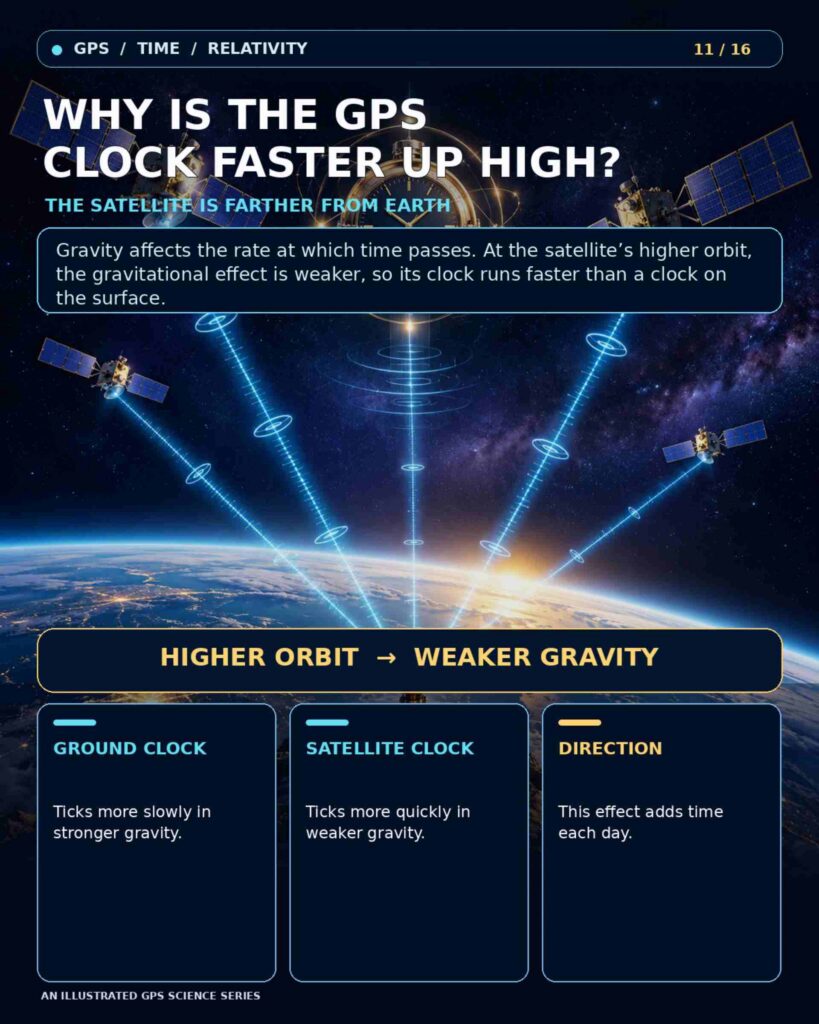
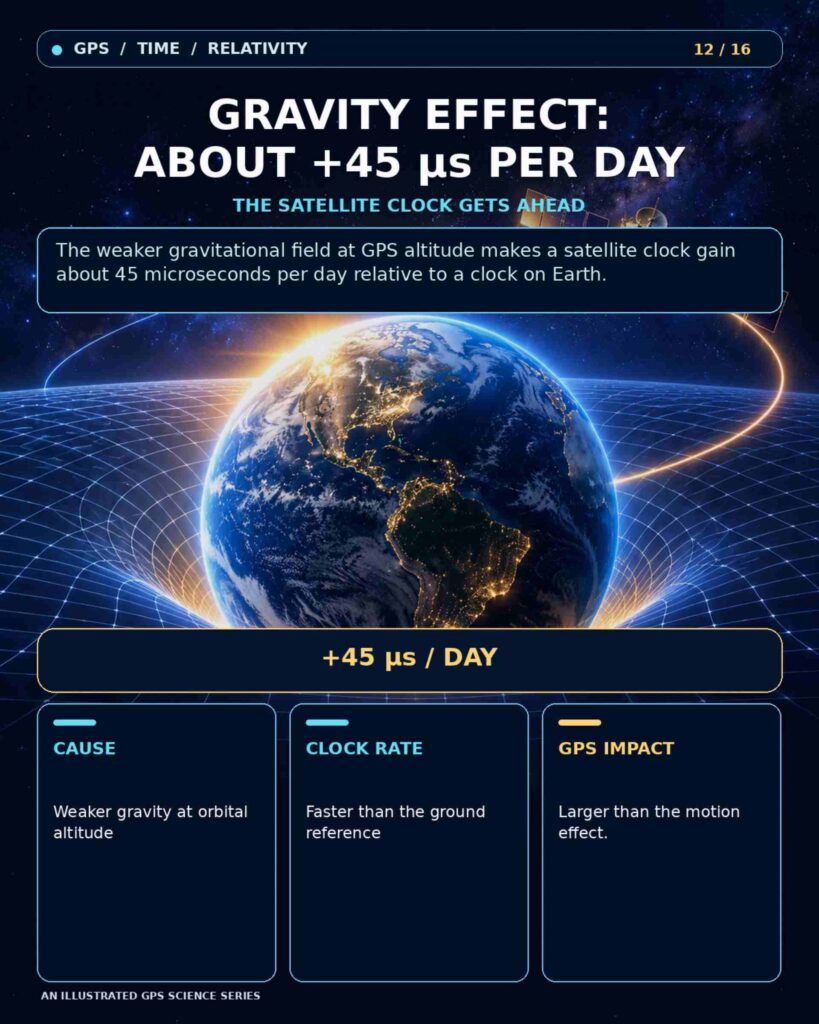
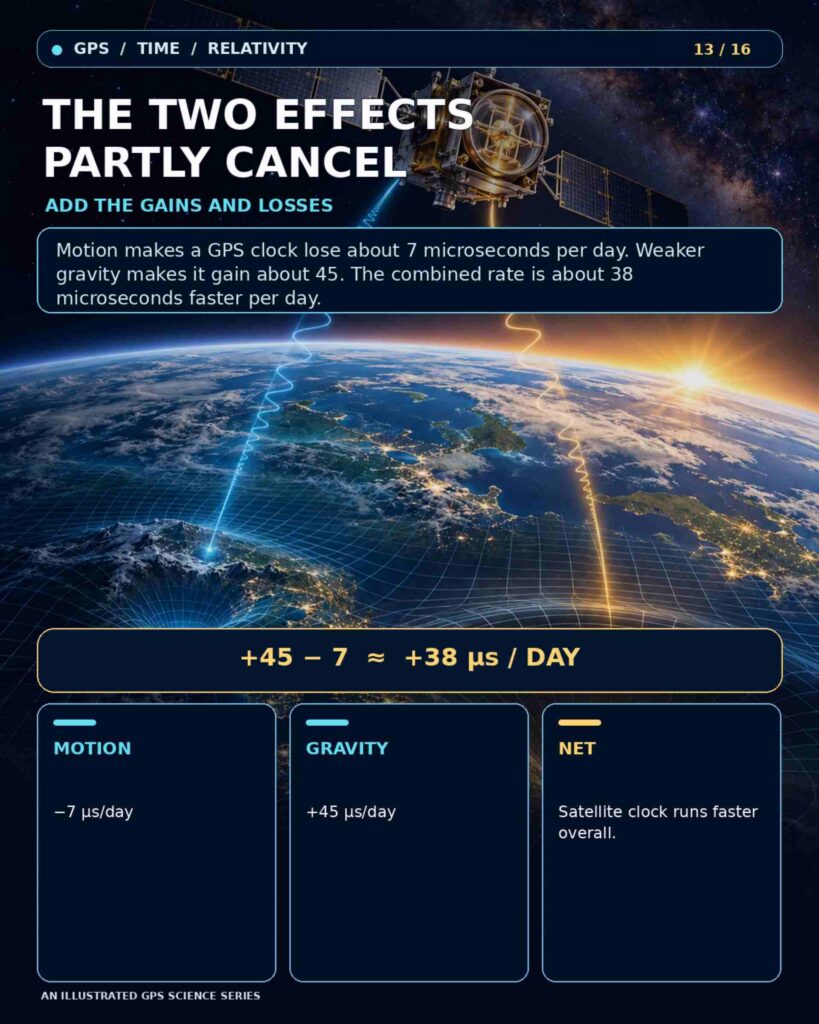
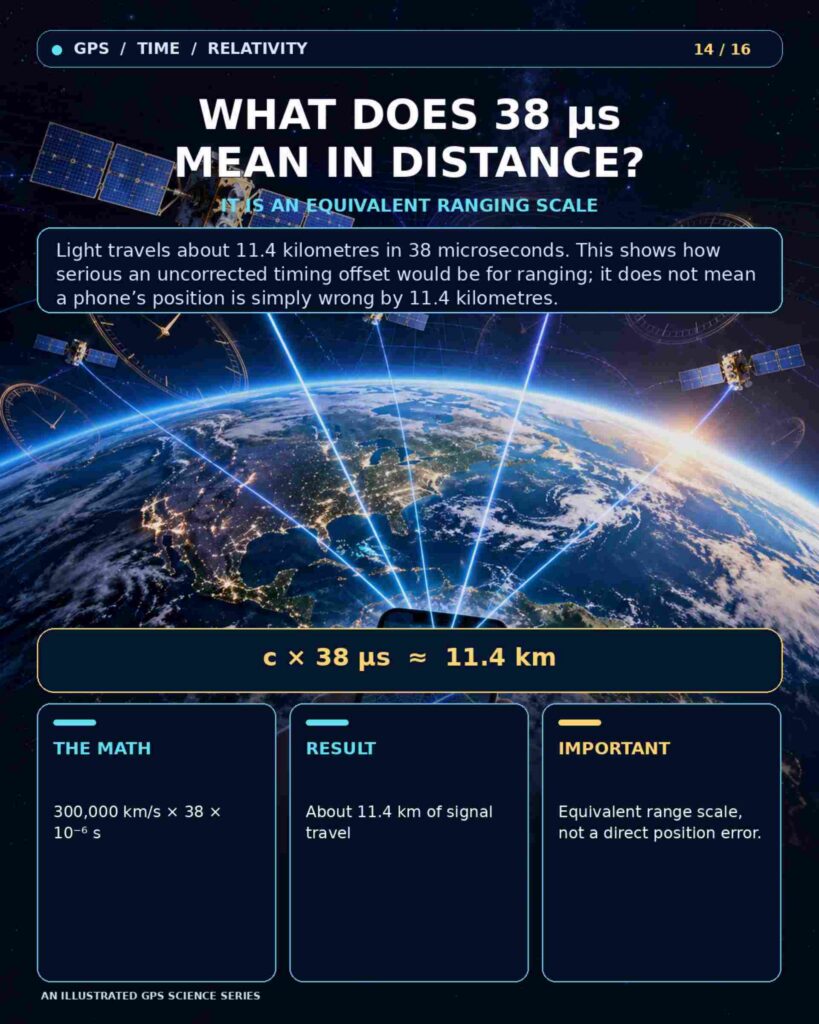
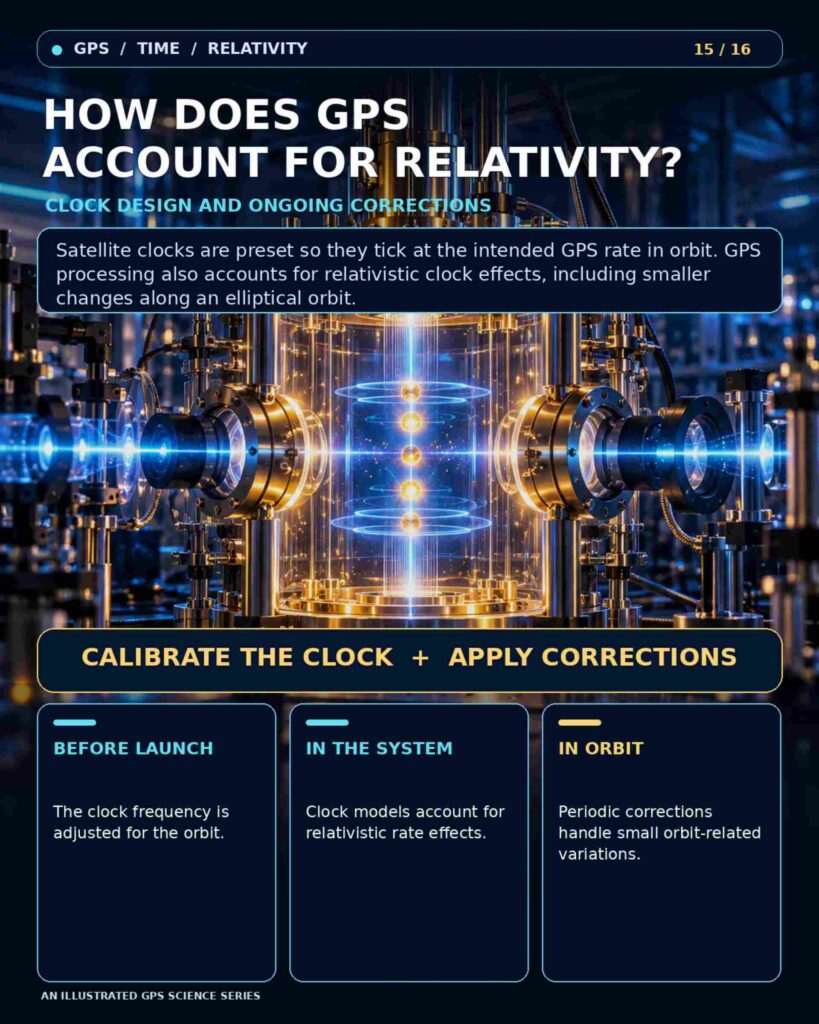
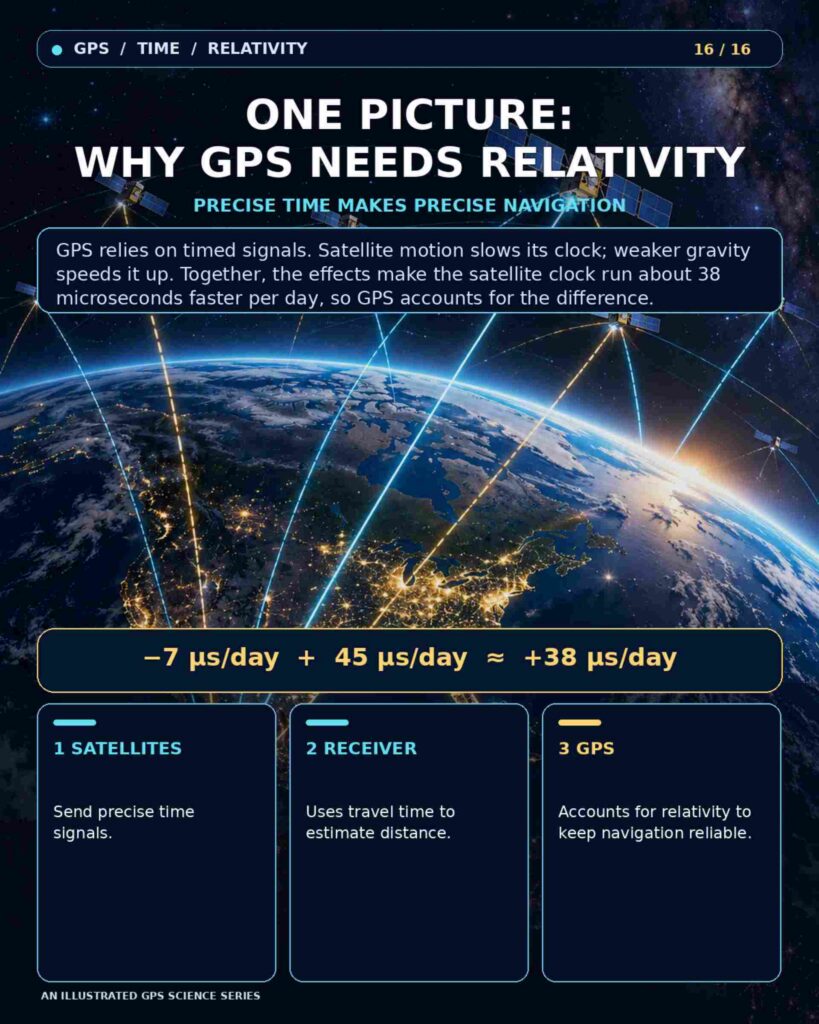
Operating at an altitude of over 20,000 kilometers and traveling at a high velocity of nearly 4 km/s, satellite clocks experience a “double tug-of-war” in spacetime. According to Special Relativity, the velocity effect causes the onboard atomic clocks to run 7 microseconds slower per day compared to ground clocks. Conversely, according to General Relativity, the weaker gravitational potential in space causes them to run 45 microseconds faster per day. The combined net effect results in the satellite clocks ticking 38 microseconds faster each day. Without proper corrections, this discrepancy would accumulate a massive positioning error of 11.4 kilometers per day. In engineering practice, this secular drift is perfectly neutralized before launch by deliberately setting the baseline frequency of the onboard atomic clocks slightly lower than the standard ground frequency.
Compared to the traditional GPS, China’s BeiDou Navigation Satellite System (BDS-3) incorporates more challenging and unique designs for relativistic corrections. Featuring a unique hybrid constellation consisting of MEO, GEO, and IGSO satellites, BDS requires classified, orbit-specific models for precision calibration. Crucially, BeiDou pioneers Inter-Satellite Link (ISL) autonomous correction technology, allowing the satellite constellation to perform cross-link time synchronization and self-alignment without relying on ground monitoring stations. Furthermore, BeiDou integrates high-order relativistic algorithms that account for the Earth’s non-spherical gravitational potential (\(J_{2}\) effect) and solar-lunar tidal forces. Combined with the real-time parameter injection via navigation messages, BDS achieves seamless, nanosecond-level periodic corrections for elliptical orbits, truly allowing a century-old theoretical physics breakthrough to guide billions of users worldwide today.