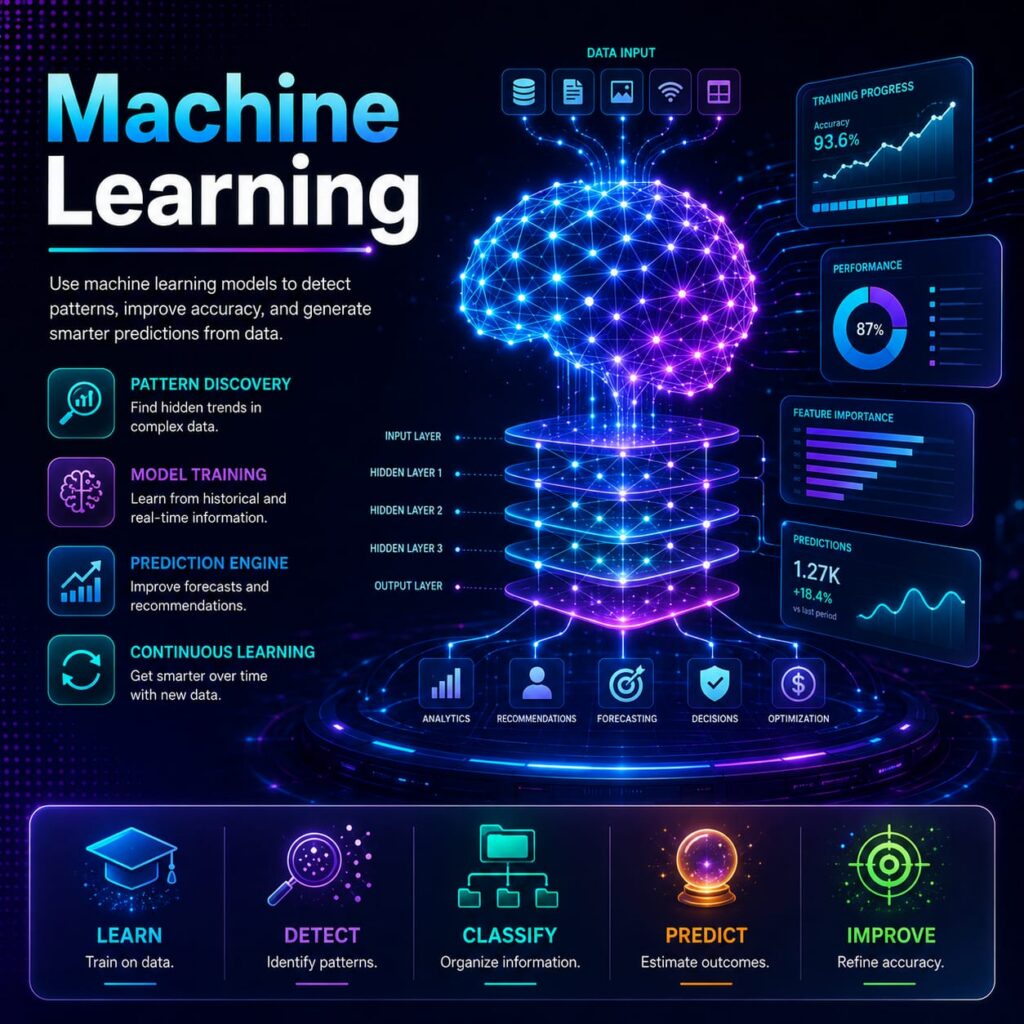

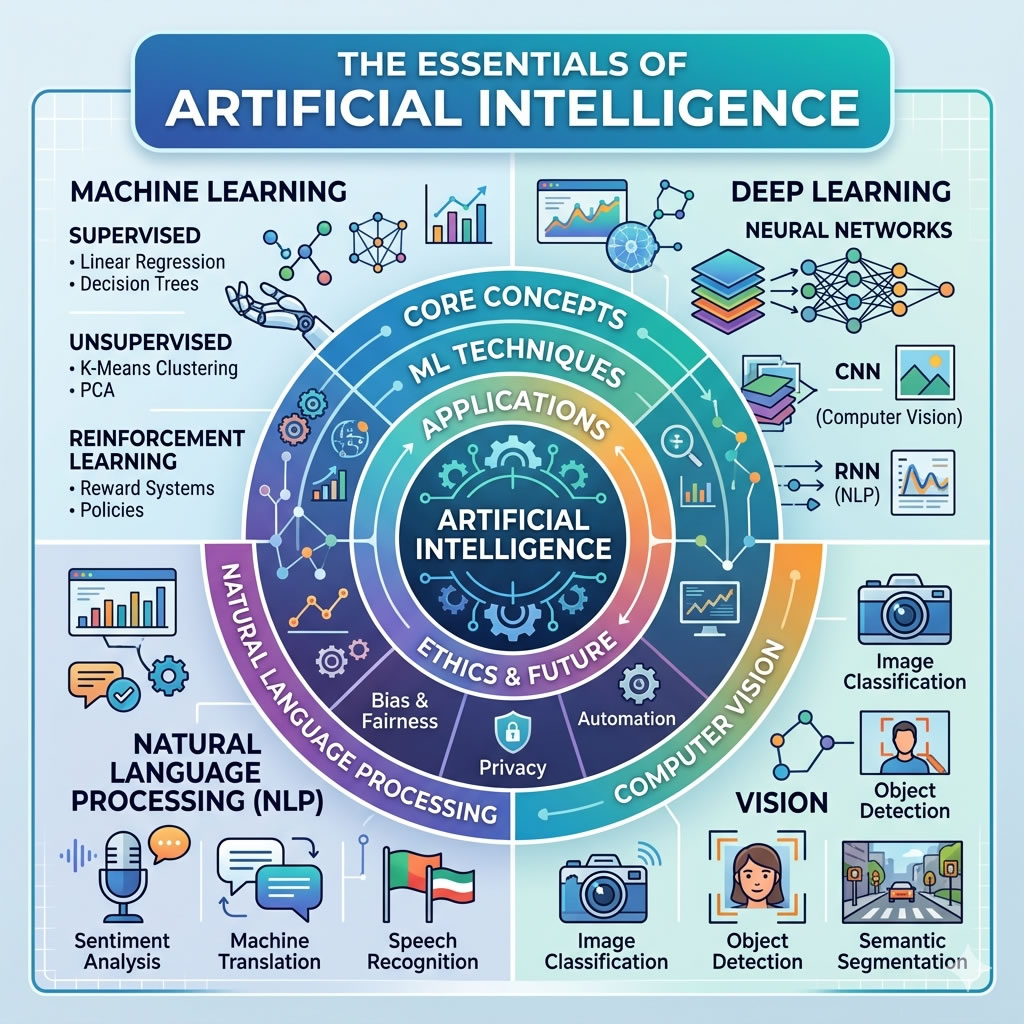

Machine Learning (ML) is a core subfield of Artificial Intelligence (AI). It focuses on building mathematical models that can automatically iterate and improve by “learning” patterns from massive amounts of data, without requiring humans to write rigid, fixed rule code for every situation.
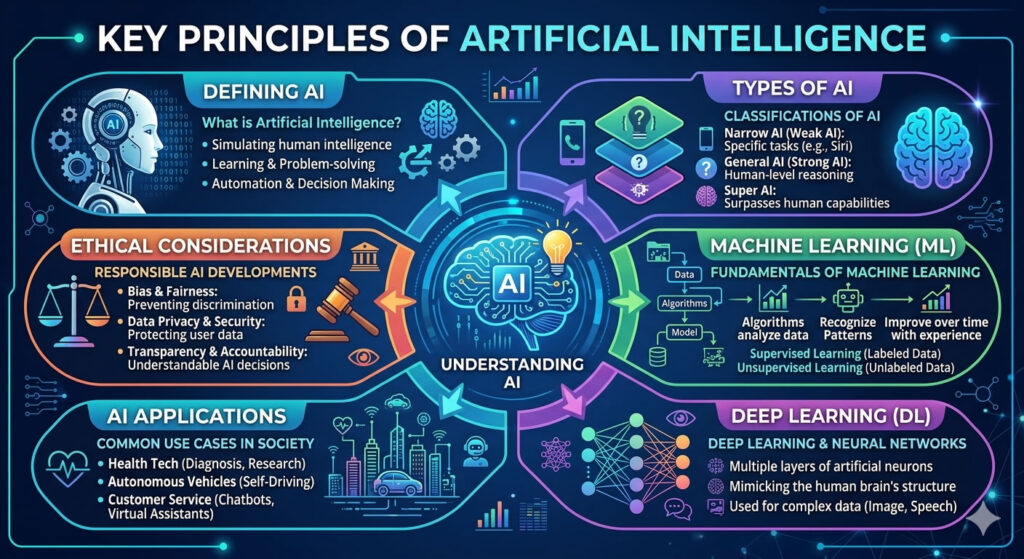
Core Method Classification
Based on the presence or absence of data labels during the learning process and the interaction method, machine learning is mainly divided into the following four categories:
- Supervised Learning: Training data has explicit labels (input + correct answer). The model continuously corrects errors by comparing its predictions with the true labels. Commonly used in scenarios such as house price prediction (regression) and spam classification (categorization).
- Unsupervised Learning: Training data has no labels. The model must autonomously discover hidden structures, patterns, or similarities within the data. Typical applications include customer clustering (automatically grouping consumers with similar purchasing behaviors) and dimensionality reduction techniques.
- Semi-Supervised Learning: Combines the above two methods. Because manually labeling massive amounts of data is extremely expensive, this method utilizes a mixture of a small amount of high-value labeled data and a large amount of unlabeled data for training, achieving the optimal balance between cost and accuracy.
- Reinforcement Learning: There are no readily available static datasets. The model (called an agent) learns optimal action strategies by continuously “trial and error” in virtual or real environments, based on the “rewards” or “penalties” given by the environment. AlphaGo (Go), autonomous driving algorithms, and game AI are its core representatives.
Classic Industrial Applications
- Finance and Risk Control: Millisecond-level analysis of cardholder’s card-swiping location, merchant type, and amount changes to automatically filter credit card fraud transactions; simultaneously using credit models for intelligent credit granting and loan limit assessment.
- E-commerce and Entertainment Recommendations: The underlying core of platforms such as TikTok, Taobao, and Netflix. By analyzing your browsing, clicks, and dwell time, machine learning algorithms such as collaborative filtering are used to tailor personalized content recommendation walls for each user.
- Business Operations Forecasting: Helps manufacturing and retail companies automatically predict product sales and raw material inventory levels for the next quarter, avoiding warehouse overflows or stockouts; enables predictive maintenance through sensor data before actual equipment failures occur in factories.
- Medical Assistance: Based on massive amounts of historical medical record data, machine learning models can automatically assist doctors in assessing the potential risk of patients developing certain chronic diseases in the future.