

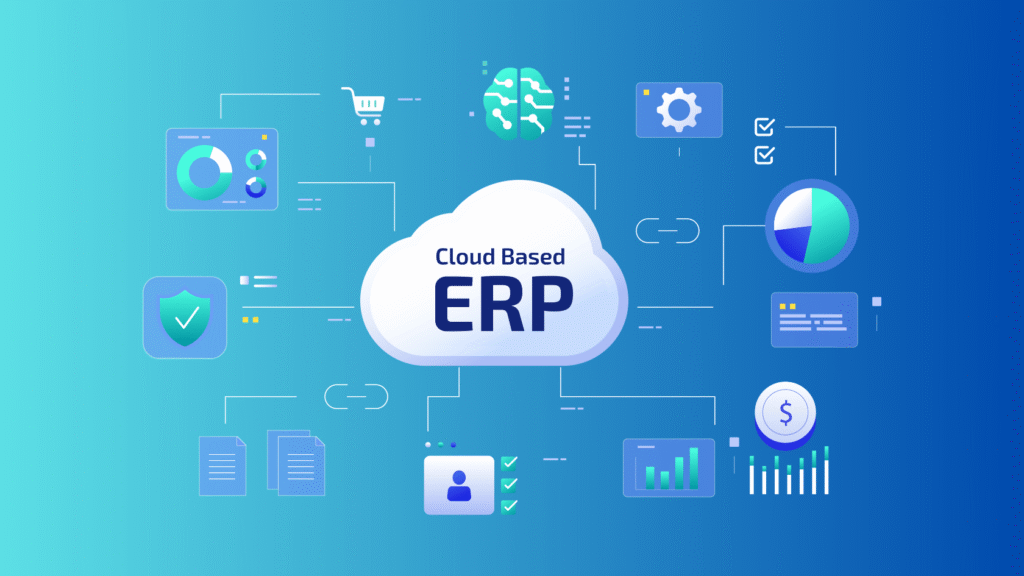
The packaging and printing industry ERP is a digital management system specifically designed for “non-standard customized” manufacturing.
Unlike ordinary retail or general manufacturing ERPs, the packaging and printing industry is characterized by “no quotation without proofing, no procurement without orders, ever-changing material specifications, and complex arbitrage in layout.” Therefore, the core of a qualified packaging and printing ERP (such as “pppERP Extended Version”) lies in solving the end-to-end management from automatic quotation, process design, intelligent layout to accurate tracking of paper roll/board inventory.
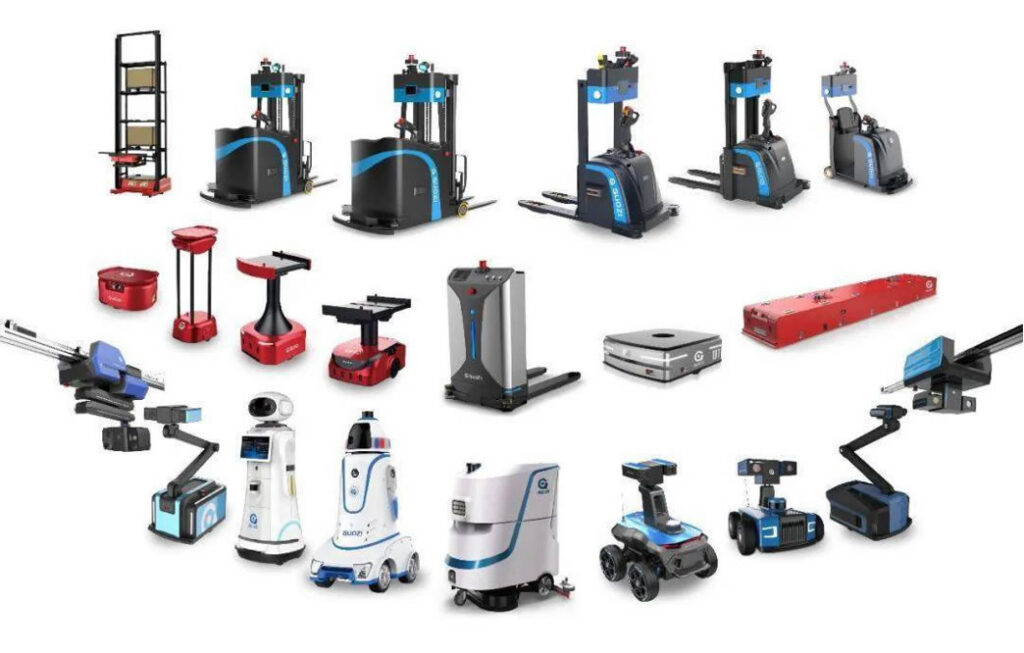
Logistics Robots
Logistics robots are intelligent hardware devices used for automated transportation, handling, sorting, and warehouse management. They are a core driving force of modern smart warehousing and supply chains.
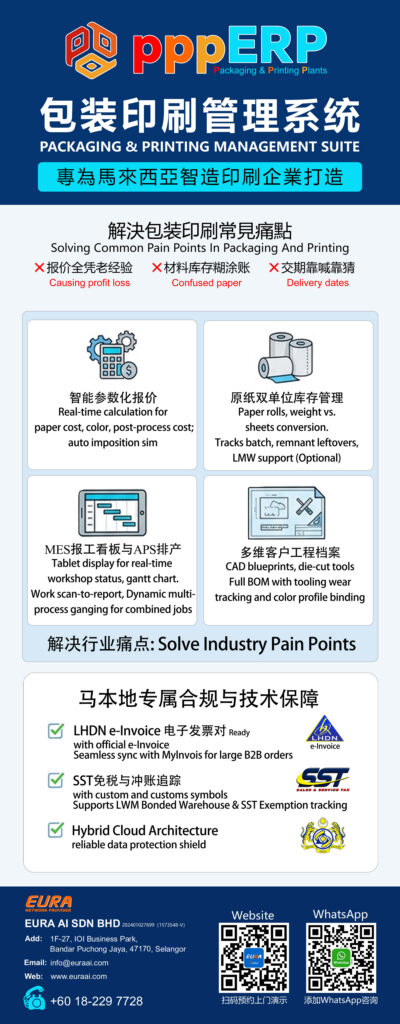
📦 The 6 Core Functional Modules of ERP Systems for the Packaging and Printing Industry
1. Smart Engineering Parametric Estimating & Quoting
This is the most critical survival line for packaging printing enterprises.
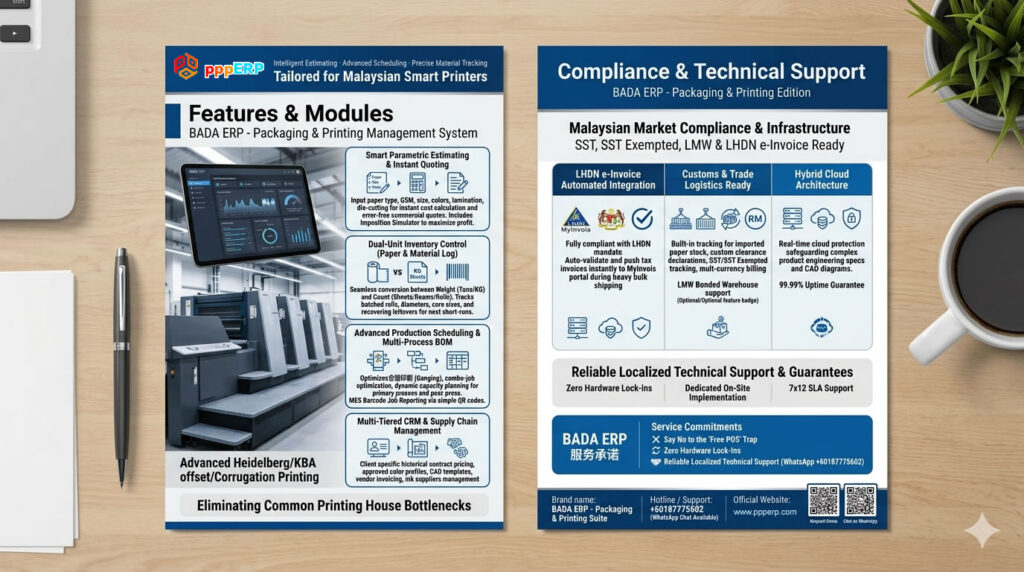
- Multi-dimensional parameter-based pricing: input the paper type (white cardstock, corrugated cardboard, gray base white), gsm, unfolded dimensions, printing colors (PANTONE specialty colors), and finishing processes (coating, foil stamping, die-cutting, UV coating); the system will automatically calculate the cost and generate a quotation within seconds.
- Panel layout dynamic material calculation: The system automatically simulates paper cutting and panel layout processes to determine the most material-efficient cutting plan and material dimensions, thereby preventing underestimation leading to financial losses or overestimation resulting in missed orders when generating manual quotes.
2. Process Route and Structural Design (Product Engineering / BOM)
- Packaging Engineering BOM: Unlike traditional mechanical BOMs,a printing BOM includes complex items such as “plate fees,” “die mold fees,” and “ink consumption rates.”
- Sample and die mold management: Integrates with CAD sample structure drawings to track the outlay, wear, and scrap lifespan of die molds, thereby ensuring engineering consistency during mass production.
3. Intelligent Production Scheduling and APS Workshop Scheduling (Advanced Scheduling & MES)
- “Sheet-based” production scheduling: Supports combining multiple small orders involving identical paper types and identical subsequent processing steps onto a single large sheet for “sheet-to-sheet printing,” which significantly reduces machine operating costs.
- Machine Production Capacity Load: Real-time monitoring of queuing status for printing presses from companies such as Heidelberg and Gaobao, as well as fully automatic die-cutting machines and window laminating machines, enabling precise lead time forecasting.
4. Paper and Main Material Dual-Unit Inventory Control
- Roll-to-flat paper conversion: Supports seamless conversion between “tons/kg (pricing unit)” and “sheets/roll/lot (reconciliation unit), eliminating discrepancies between book records and physical quantities during raw paper warehousing and material requisition processes.”
- Waste and scrap tracking: Any remaining trimmings or large base paper after printing are automatically barcoded and stored in inventory; these materials are prioritized for use in subsequent small orders, with a strong focus on maximizing paper utilization.
5. Production Quality Control and Scrap Rate Management (Quality & Scrap Tracking)
- Initial startup inspection: Strictly control prepress color matching (spectrophotometer data integration) and alignment.
- Post-process loss analysis: Real-time recording of scrap rates for each process—printing, laminating, and die-cutting—automatically triggers replenishment workflows to prevent issues such as “insufficient quantity” from being identified only upon close-to-delivery inspection.
6. Automatic Compliance Integration (Compliance – e.g., LHDN e-Invoice Ready)
- Compliant invoicing: Fully integrates with Malaysia’s LHDN MyInvois or local tax authorities to automatically generate compliant electronic invoices for bulk B2B packaging orders, ensuring full tax compliance for the Group.
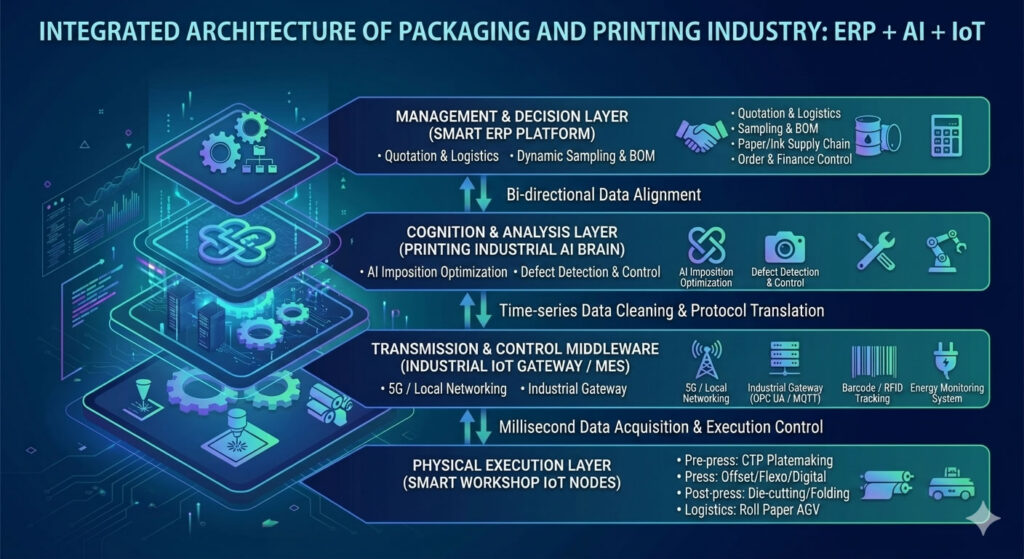
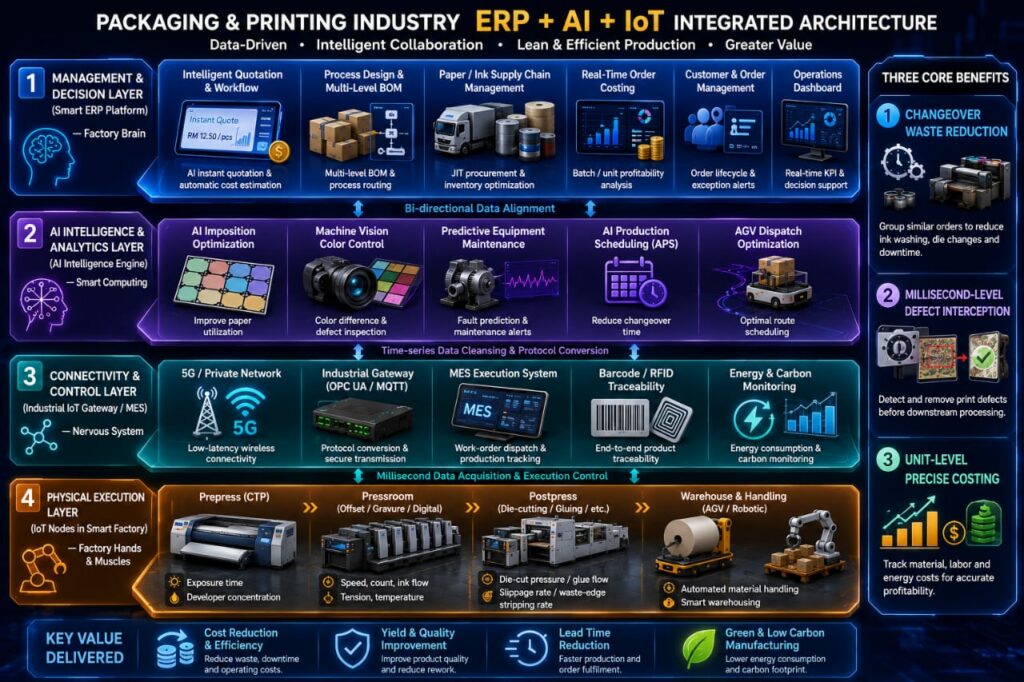
Three core benefits of ERP implementation:
- “Zero production change” waste: AI scheduling allows orders with similar colors and consistent specifications to be arranged in a row, greatly reducing the idle time of cleaning ink tanks and replacing die-cutting knives.
- Millisecond-level waste interception: Printing defects are identified by end-side vision AI at the millisecond level, and are removed before die-cutting and box-gluing, preventing defective products from flowing to the backend and causing more expensive material waste.
- Cost accounting accurate to a single box: allows enterprises to truly understand their profits, and solves the extensive management shortcomings of traditional packaging factories that “think they have made money, but end up counting losses at the end of the month”.